What is AI Sentiment Analysis?
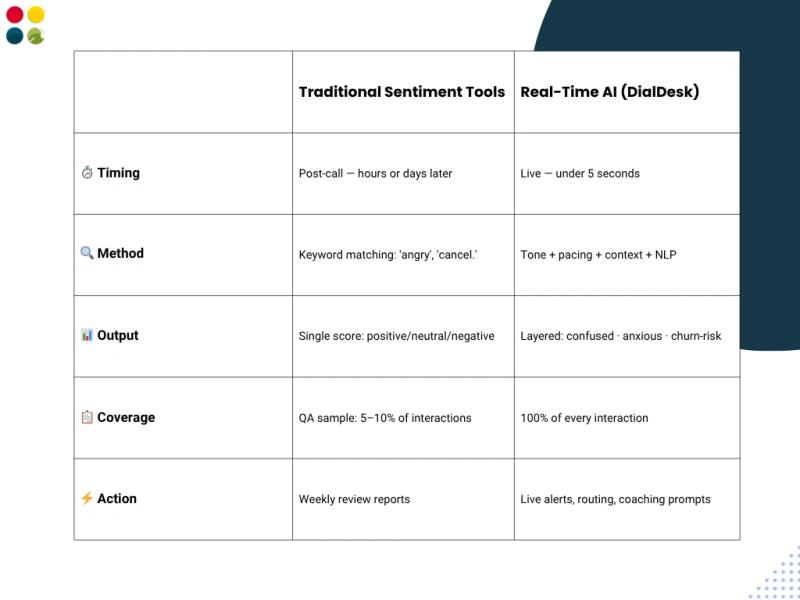
AI Sentiment Analysis is the use of Natural Language Processing (NLP) and acoustic AI to detect, classify, and act on customer emotions in real time, during live interaction, so support teams can respond to how customers feel, not just what they say. DialDesk's Sentiment Analysis AI processes every interaction in under 5 seconds across voice, chat, and WhatsApp.
Why 5 Seconds Is the Difference Between Loyalty and Churn
Speed has always mattered in customer experience. But in 2025, emotional speed is the new competitive edge. Customers judge brands not just on how fast they respond but on how fast they understand. Not just what the customer said, but how they said it.
Teams rarely fail because of data scarcity. They fail because emotion moves fast and is impossible to track at scale. A customer can sound 'fine' and mean 'fix this now.' This emotional gap is where Customer Churn happens silently before any survey captures it.
AI Sentiment Analysis, processing signals in under 5 seconds, is now the backbone of next-generation customer experience. It does not wait for weekly QA reviews or end-of-call surveys. It listens, scores, and alerts in real time.
💡 Why It Matters
Less than 7% of customers complete post-call surveys (Qualtrics, 2024). For most brands, real-time AI is the only reliable emotional feedback channel available at scale.
What Makes 5-Second Sentiment AI Different from Traditional Approaches?
The Science: How AI Detects Emotion in Under 5 Seconds
Modern Sentiment Analysis AI engines break emotion into four signal categories that humans register but cannot track consistently at scale:
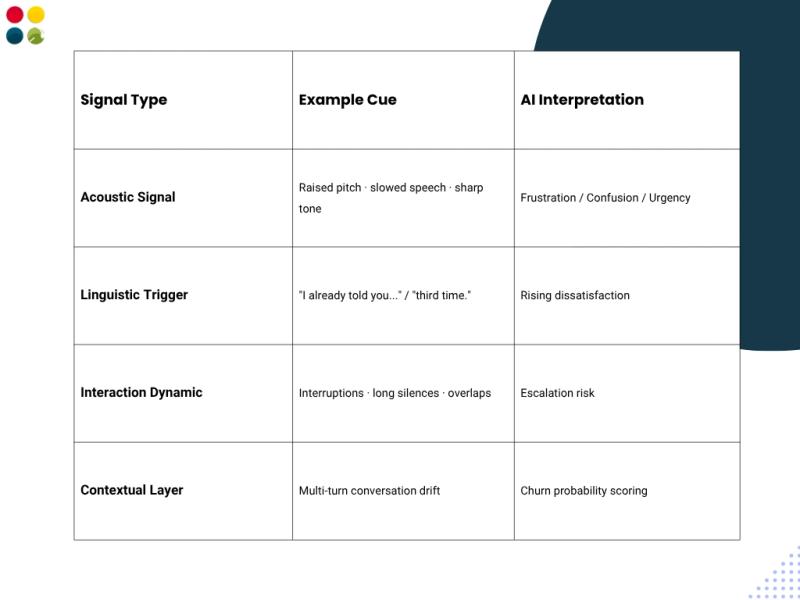
The critical distinction: Sentiment Analysis AI does not just detect 'negative sentiment.' It separates confused from upset, anxious from angry, and disappointed from about to churn. Human QA fails here, not from lack of skill, but from lack of scale.
Business Impact: The Numbers Behind Emotion
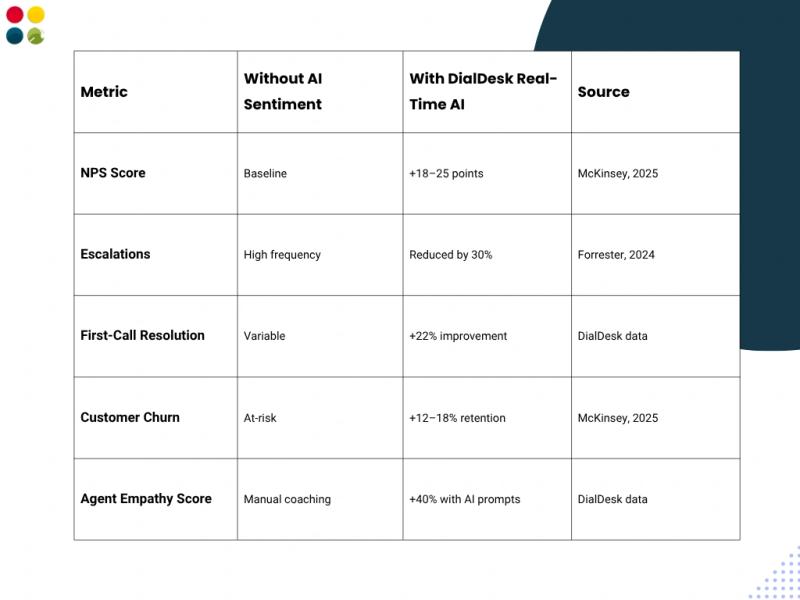
Emotion is not a soft metric. Brands that deploy AI Sentiment Analysis in real time achieve compounding business results (McKinsey, 2025):
✅ Trusted by 500+ Contact Centers Across India
DialDesk's AI Sentiment Analysis engine is ISO 9001:2015 and ISO 27001:2013 certified enterprise-grade intelligence built for India's contact center environment. See our full call center software India platform.
Key Takeaways
• AI Sentiment Analysis detects emotional signals in under 5 seconds across voice, chat, and WhatsApp.
• Sentiment Analysis AI reads tone, context, pacing, and linguistic patterns, separating confused from upset, anxious from angry.
• Real-time analysis enables live intervention, supervisor alerts, routing changes, and agent coaching, not retrospective review.
• Customer Churn signals are detected mid-interaction, triggering proactive retention before the customer disengages.
• DialDesk processes 100% of interactions, not a 5–10% QA sample — delivering complete emotional intelligence at scale.
• 85–92% accuracy outperforms keyword-based models (55–65%) and manual QA sampling by a statistically significant margin.
Conclusion
AI Sentiment Analysis is not the future of customer experience. It is the present operational reality for every contact center that wants to retain customers in 2025.
Feelings shift mid-conversation. A customer who starts frustrated can leave loyal — if the right signal reaches the right agent at the right moment. Brands that close this emotional gap retain customers. Those that rely on post-call surveys and sampled QA lose them quietly, one interaction at a time.
Explore how DialDesk's AI Sentiment Analysis platform connects with your IVR, call routing, and cloud telephony India stack to deliver emotion intelligence from day one — no hardware required.
Emotion drives loyalty. AI drives emotion clarity. DialDesk delivers both.
✅ Trusted Signal: DialDesk's Certifications
ISO 9001:2015 (Quality Management) · ISO 27001:2013 (Information Security) · 500+ contact centers across India · Deployed across Healthcare, Banking, Retail, Telecom, and FMCG verticals.
📅 Want to Turn Emotion Into Loyalty?
DialDesk's real-time AI Sentiment Analysis engine analyses calls, chats, and WhatsApp queries in under 5 seconds — giving your team actionable emotional intelligence across every interaction. Join 500+ contact centers across India already transforming CX with DialDesk.