What is Customer Lifetime Value (CLTV) and how is it calculated?
Customer Lifetime Value (CLTV) is the total revenue a business can expect from a single customer over the entire length of their relationship with the company. It's typically calculated by multiplying average purchase value, purchase frequency, and average customer lifespan. CLTV matters because it shows whether the cost of acquiring a customer is justified by their long-term value, and it's directly influenced by Customer Loyalty; the more loyal a customer, the longer they stay and the more they tend to spend.
Why CLTV Matters More Than Any Single Transaction
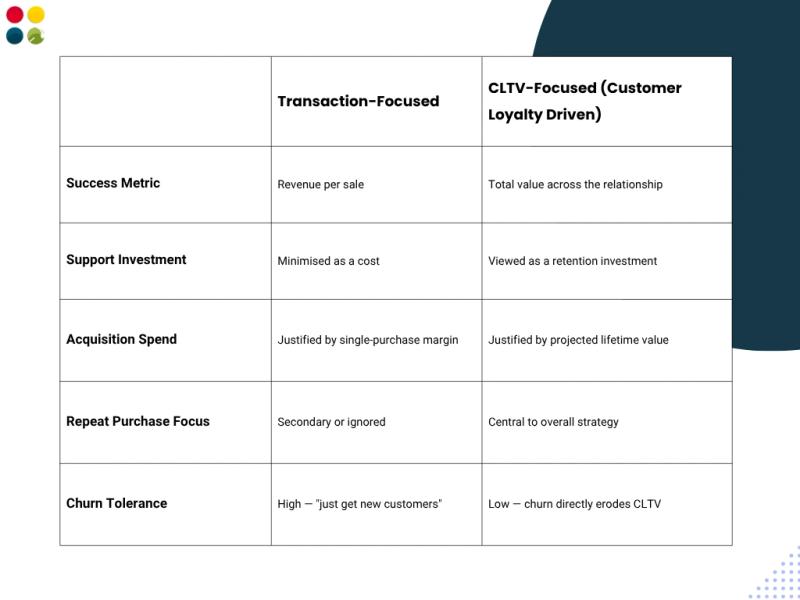
Businesses that only look at individual purchase value miss the bigger picture; a customer who spends less per order but stays loyal for years can be far more valuable than a one-time big spender who never returns.
Customer Lifetime Value reframes how a business should think about acquisition cost, retention investment, and service quality; all of it ultimately connects back to how much a customer relationship is actually worth over time.
Customer Loyalty is the biggest lever affecting CLTV, since retention and repeat purchase behavior compound over the length of the relationship in a way a single transaction never can.
💡 Why It Matters
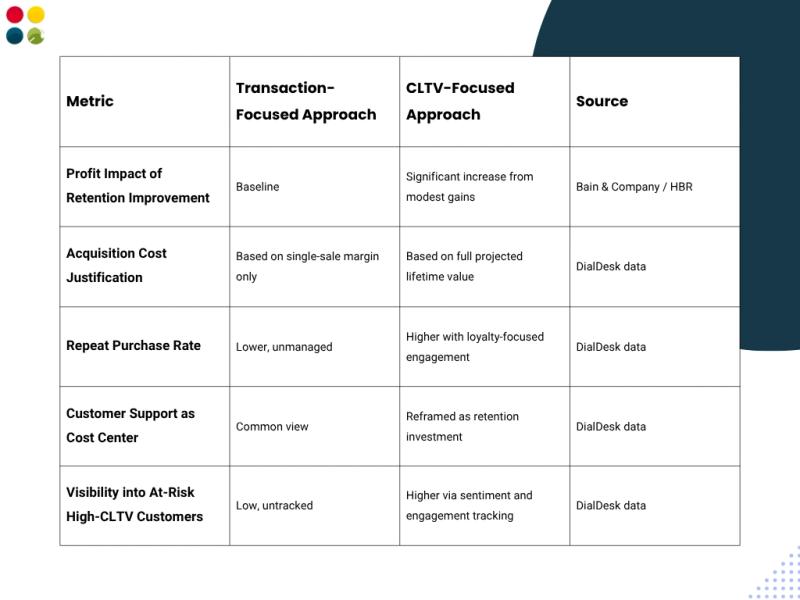
Increasing customer retention by just a few percentage points can increase profits significantly, since acquiring a new customer typically costs several times more than retaining an existing one (Bain & Company / Harvard Business Review).
Transaction-Focused Thinking vs CLTV-Focused Thinking
How to Calculate and Improve Customer Lifetime Value
Understanding how to calculate CLTV is straightforward, but improving it requires connecting the formula to what actually drives Customer Loyalty day to day.
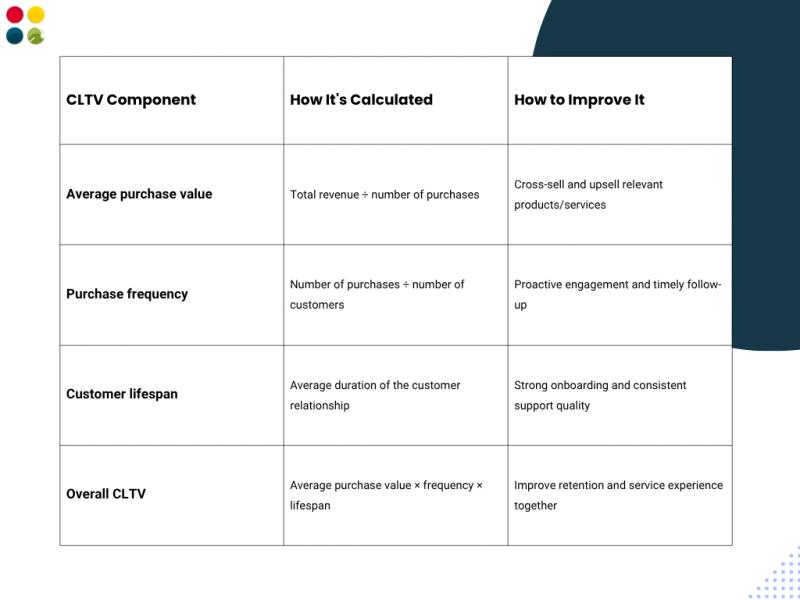
Each component of CLTV responds to a different lever, which is why improving it holistically requires attention to onboarding, support quality, and proactive engagement, not just sales tactics.
Business Impact: The Numbers Behind CLTV and Customer Loyalty
Businesses that actively manage CLTV through retention-focused strategies see measurable profit improvements (Bain & Company / Harvard Business Review).
✅ Trusted by 500+ Businesses Across India
DialDesk's analytics supporting Customer Lifetime Value tracking run on infrastructure that is ISO 9001:2015 and ISO 27001:2013 certified. See our full call center software India platform.
Key Takeaways
● Customer Lifetime Value reframes success around the full relationship, not just a single transaction.
● CLTV is calculated by multiplying average purchase value, purchase frequency, and customer lifespan.
● Customer Loyalty is the biggest lever affecting CLTV, since retention compounds value over time.
● Improving CLTV requires attention to onboarding and support quality, not just sales tactics.
● DialDesk supports tracking the engagement and sentiment data that feed into CLTV-driving retention strategies.
Conclusion
Customer Lifetime Value gives businesses a more accurate lens than individual transactions for understanding what a customer relationship is actually worth, and where to invest to protect that value.
Since Customer Loyalty is the strongest lever behind CLTV, businesses focused on this metric naturally shift investment toward retention, onboarding, and support quality, areas that compound in value over time rather than producing a single one-time return.
Explore how DialDesk's Call Analytics and AI Sentiment Analysis tools help you track the engagement signals that drive Customer Lifetime Value, connected to your CRM integration.
A customer's true value is measured in years, not one transaction. DialDesk helps you protect that value.
📅 Want to Track and Improve Customer Lifetime Value?
DialDesk's analytics track the engagement and sentiment signals that drive Customer Loyalty and long-term CLTV. Join 500+ businesses across India already investing in retention with DialDesk.