What Role Do Contact Centers Play in Emergency Services?
Contact Centers are the first point of human contact in any emergency — the team that answers, triages, and routes a distress call to police, fire, or medical responders. The speed and accuracy of that first call determines how fast real help arrives, making the Contact Centers in India sector a direct, measurable part of public safety outcomes.
Why Every Second on Hold Is a Second Away from Help
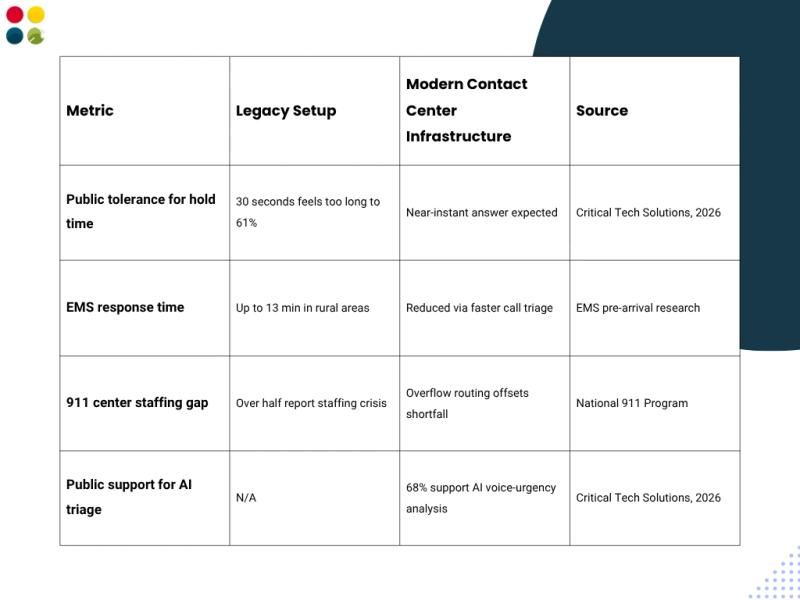
Public tolerance for delay in an emergency has collapsed. A recent survey found that 61% of people say a 30-second hold on an emergency line would make them extremely concerned, and 84% worry about reaching help at all during a large-scale outage or disaster. In an emergency, a hold queue is not an inconvenience; it is the gap between a call being answered and a responder being dispatched.
This is why the infrastructure behind Contact Centers handling emergency or crisis lines needs to be engineered differently from a standard support line, built for zero downtime, instant routing, and call volumes that can spike without warning.
💡 Why It Matters
EMS response times average roughly 7 minutes nationwide and climb to 13 minutes in rural areas, with delays directly linked to worse patient outcomes in trauma and cardiac cases. Every minute a call spends in a queue is a minute subtracted from that window.
What Makes Emergency Call Handling Different from Standard Support
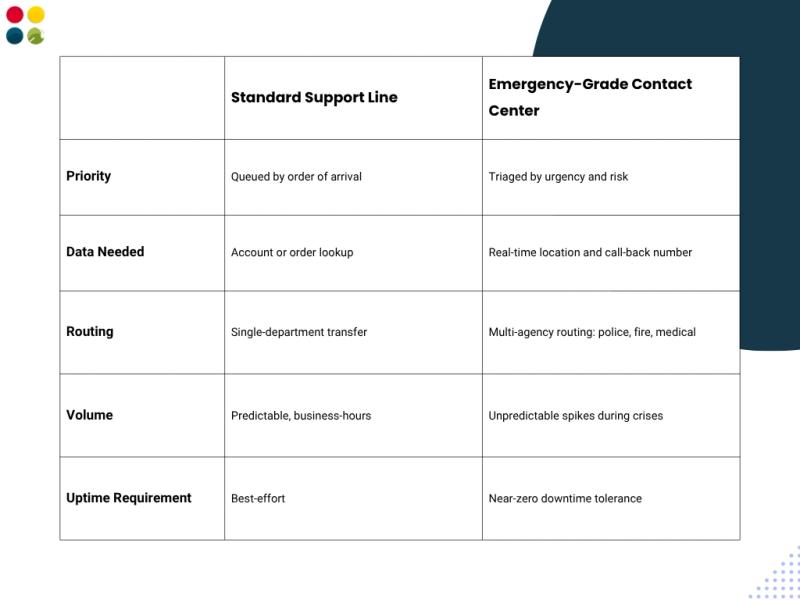
The Mechanics: How Contact Centers Shorten the Emergency Response Chain
The reduction in delay comes from four operational layers working together, not from any single tool:
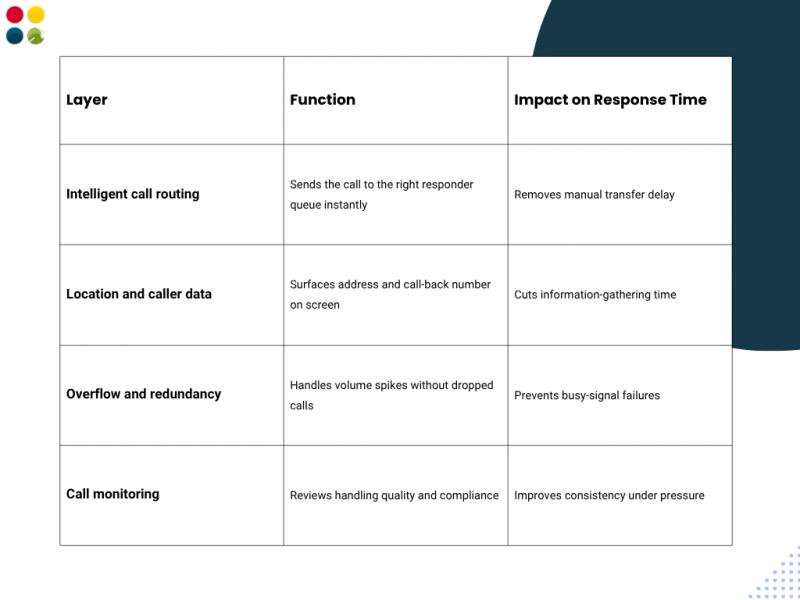
Staffing shortages compound the risk here: more than half of emergency call centers report facing a staffing crisis, which is exactly the pressure a well-designed contact center architecture is built to absorb without degrading response quality.
Business and Public-Safety Impact: The Numbers Behind Faster Response
✅ Trusted by 500+ Contact Centers Across India
DialDesk's mission-critical call infrastructure runs on an ISO 9001:2015 and ISO 27001:2013 certified platform — engineered for the uptime and data-security standards that Contact Centers in India require for crisis-grade operations.
🛡 Built for Zero Downtime
DialDesk's cloud architecture includes redundant routing and overflow handling, so Contact Centers on the platform stay reachable during volume spikes, the exact moments when emergency and crisis lines matter most.
Key Takeaways
• Contact Centers are the first human link in the emergency response chain, their speed directly affects outcomes.
• Public tolerance for hold time on an emergency line has fallen to seconds, not minutes.
• Intelligent routing, real-time location data, and overflow handling shorten the time between a call and a dispatched responder.
• Staffing shortages make resilient contact center infrastructure a public-safety issue, not just an operational one.
• Modern Contact Centers in India are increasingly built cloud-first to meet zero-downtime expectations.
Conclusion
When the phone rings during an emergency, the Contact Centers on the other end are not a support function — they are the first responder before the first responder arrives. Every second saved in routing, triage, and data retrieval is a second returned to the people who show up next.
Explore how DialDesk's infrastructure connects IVR and call routing with cloud telephony India to build a resilient, crisis-ready call infrastructure, no hardware required.
Every second counts. DialDesk builds Contact Centers that count them well.
📅 Ready to Build Crisis-Ready Call Infrastructure?
DialDesk helps Contact Centers design resilient, zero-downtime call infrastructure for emergency, crisis, and mission-critical lines. Join 500+ contact centers across India already running on DialDesk.