Customer Experience

What is Customer Experience Management (CXM)? Guide to Building Exceptional Customer Journey

DialDesk Team
November 5, 2025
8 min read

OVERVIEW

Customer Experience Management (CXM) is a strategic approach that focuses on designing, overseeing, and improving every interaction a customer has with a brand across their entire journey. It involves understanding customer needs, emotions, and expectations at each touchpoint—whether online or offline—to deliver consistent, personalized, and meaningful experiences.

This complete guide explains how businesses can build exceptional customer journeys using CXM. It covers key elements such as customer journey mapping, data collection and analysis, personalization strategies, omnichannel communication, and real-time feedback systems. It also highlights the role of technology, including AI, CRM tools, and automation, in enhancing customer engagement.

By effectively managing customer experience, businesses can improve satisfaction, increase loyalty, drive positive word-of-mouth, and gain a competitive edge. CXM isn’t just a strategy—it’s a continuous process that places the customer at the heart of every business decision.

Introduction

In today’s competitive digital economy, customers no longer choose a brand solely for its price or product features—they choose it for the experience it delivers. Every call, chat, or WhatsApp message creates a lasting impression that defines your relationship with customers.

So, What is Customer Experience Management (CXM)?

Customer Experience Management, often abbreviated as CXM, refers to the process of designing, optimizing, and managing every interaction a customer has with your brand across multiple touchpoints. Unlike traditional customer relationship management (CRM), which focuses on internal processes, CXM puts the customer journey at the center of your business strategy.

In this guide, we’ll explore why CXM matters, how to build a powerful strategy, and what technologies—including AI-driven solutions like DialDesk’s Cloud Contact Center Solutions—can help you deliver a seamless, personalized experience at scale.

Why Customer Experience Management Matters?

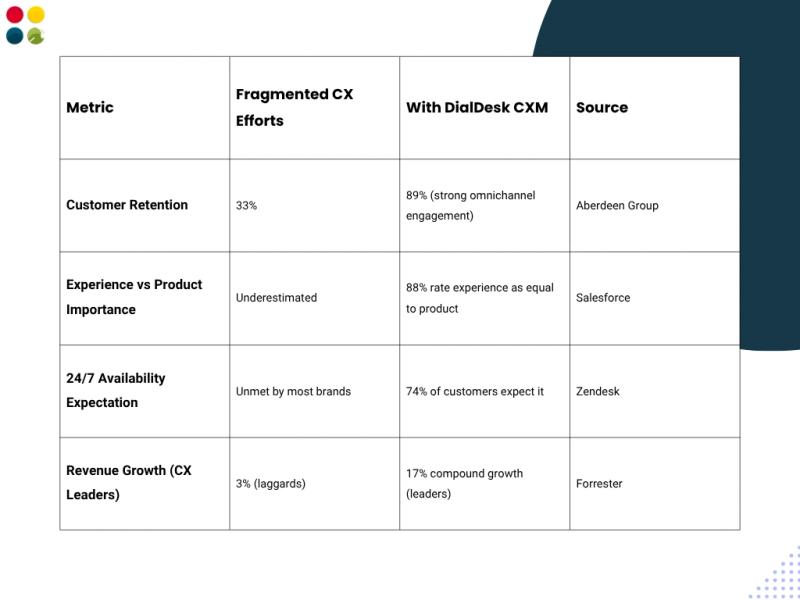
Customer Experience Management is more than just a buzzword—it’s a critical differentiator. Studies show that more than 80% of customers are willing to pay more for brands that provide better experiences.

When executed effectively, CXM helps businesses:

● Increase customer satisfaction and loyalty

● Reduce churn through proactive communication

● Boost revenue by converting every support touchpoint into an upselling opportunity

In 2025 and beyond, CXM isn’t just about customer service—it’s about growth enablement. Brands that master it are able to adapt faster, personalize better, and build stronger emotional connections with their audiences.

Key Components of an Effective CXM Strategy

1. Customer Journey Mapping

The first step in CXM is understanding how customers interact with your business from the first click to post-purchase. Mapping out this journey helps identify friction points and opportunities to delight customers.

By using real-time data and feedback, brands can continuously improve each stage of the customer lifecycle—from discovery to advocacy.

2. Omnichannel Engagement

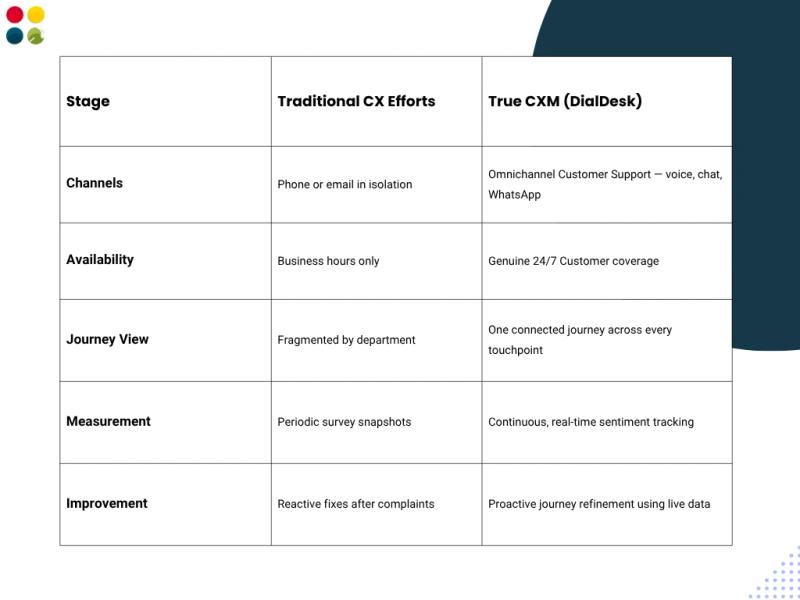
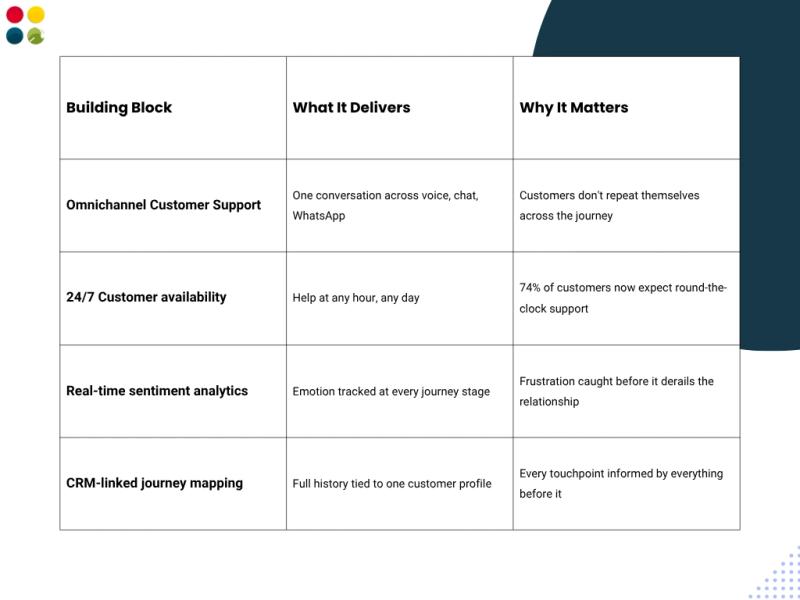
Today’s customers expect to connect on their terms—through voice, email, chat, or WhatsApp. That’s where DialDesk’s Omnichannel Customer Interaction comes in, enabling brands to manage conversations seamlessly across channels.

An omnichannel strategy ensures consistent messaging, faster response times, and better context awareness—creating a unified brand experience no matter how or where the customer reaches out.

3. Personalization at Scale

AI-powered insights make it possible to deliver one-to-one experiences across thousands of interactions. By analyzing customer behavior, preferences, and sentiment, companies can send the right message at the right time—boosting engagement and conversions.

4. Feedback and Sentiment Analysis

Customer feedback is the heartbeat of experience management. Tools like DialDesk’s CallMaster enable 100% call auditing and sentiment tagging to uncover insights that help businesses continuously refine service quality.

5. Data Unification and Insights

CXM platforms bring all your customer data together—from calls, chats, and WhatsApp messages—into a single, actionable view. This unified data foundation enables predictive analytics, faster resolution, and more personalized engagement.

CXM vs. CRM — What’s the Difference

[@portabletext/react] Unknown block type "image", specify a component for it in the `components.types` prop

For instance, CRM tools help track leads and sales data, while CXM platforms—like DialDesk’s Cloud Contact Center Solutions—help businesses deliver a consistent, humanized experience across every channel.

Benefits of Implementing Customer Experience Management

1. Improves Customer Loyalty and Retention

Satisfied customers are more likely to return and recommend your brand. CXM enables proactive engagement that strengthens trust and long-term relationships.

2. Boosts Brand Advocacy

When customers feel heard and valued, they become vocal advocates. Positive experiences fuel word-of-mouth marketing, which remains one of the most powerful growth drivers.

3. Reduces Operational Costs

With 24 7 Customer Support and automation tools, brands can serve customers efficiently without inflating headcount. Automated routing and AI chatbots reduce repetitive workloads for agents.

4. Generates Real-Time Insights

AI-driven analytics convert support data into actionable intelligence. These insights help managers optimize workflows, predict trends, and measure performance effectively.

5. Strengthens Competitive Advantage

In industries like retail, healthcare, and BFSI, speed and empathy set leading brands apart. CXM ensures consistent quality even at scale—keeping businesses ahead of competitors.

Common Challenges in CXM (and How to Solve Them)

Data silos: Integrate all touchpoints using a unified CXM platform.

Lack of personalization: Use behavioral analytics to understand what customers want.

Difficulty in measuring ROI: Define metrics such as Net Promoter Score (NPS), average response time, and resolution rates.

Brands like DialDesk solve these challenges through AI-powered voice analytics, omnichannel engagement, and centralized reporting—all without requiring businesses to build an in-house team.

CXM in Action: Real-World Use Cases

● E-commerce

Order confirmations, cart recovery messages, and feedback loops enhance post-purchase experiences while driving repeat sales.

● Healthcare

Automated appointment reminders, compliance-driven communication, and patient feedback collection improve satisfaction and trust.

● BFSI

Fraud prevention, secure communication, and Omnichannel Customer Support reduce customer churn and enhance brand reliability.

● Education

AI-powered chatbots help institutions handle inquiries, manage applications, and support students 24/7.

These examples mirror DialDesk’s industry-driven approach, which adapts CXM solutions for different verticals—from travel to telecommunications.

Choosing the Right CXM Software

Before selecting a CXM platform, consider these six essential questions:

● Does it unify customer data in real time?

● Can it personalize communication across multiple channels?

● Does it support AI-driven insights and automation?

● Is it scalable for business growth?

● Does it comply with data privacy regulations?

● Can it integrate with your existing CRM or ERP system?

Platforms like DialDesk, Microsoft Dynamics 365, and Zendesk are designed to meet these needs while maintaining flexibility, transparency, and scalability.

The Future of Customer Experience Management

CXM is rapidly evolving with AI, voice analytics, and predictive personalization. Automation will play a major role in anticipating customer intent before they even reach out.

Tomorrow’s CX leaders will leverage real-time insights to make every interaction proactive, personalized, and memorable. As automation grows, empathy will remain the core of great experiences—technology will enhance it, not replace it.

Conclusion: Turning CXM into a Growth Engine

Customer Experience Management is no longer optional—it’s essential. From first contact to post-purchase follow-up, every moment matters.

When implemented correctly, CXM becomes the bridge between operational efficiency and emotional connection, enabling brands to deliver consistent, memorable, and profitable experiences.

Ready to deliver world-class customer experiences without the overhead of an in-house team?

Book a free demo with DialDesk and discover how AI-powered Customer Experience Management can transform your customer service into a scalable growth engine.

Frequently Asked Questions

Find answers to common questions about this topic

Share this article

About the Author

D

DialDesk Team

The DialDesk team is dedicated to helping businesses improve their customer experience through innovative solutions and insights.

Related Articles

Customer Experience

How to Manage the Customer Experience Post Sales?

Learn practical ways to enhance Customer Experience Post Sales with support, timely communication, and customer-centric strategies.

Customer Experience

How to Increase Conversion Rate in Sales?

Boost your Sales Conversion Rate with actionable sales tips, lead nurturing methods, and performance-focused strategies.

Customer Experience

How to Improve Customer Experience by Customer Service?

Explore practical tips to improve Customer Experience and build long-lasting relationships with today’s demanding customers.

Ready to Transform Your Customer Experience?

See how DialDesk can help your business deliver exceptional support

Get Weekly CX Insights

Join 1,000+ professionals receiving expert tips on customer experience and support automation.