OVERVIEW
This comprehensive guide explains the key differences between inbound and outbound call centers — the reactive vs. proactive sides of customer communication. It explores how inbound centers focus on customer support and satisfaction, while outbound centers drive sales, marketing, and lead generation. The article also highlights the technology, skills, and hybrid strategies that help businesses optimize both operations. With DialDesk’s cloud-based platform, integrated CRM, and omnichannel tools like IVR, ACD, and WhatsApp Business API, companies can streamline workflows, enhance service quality, and deliver superior customer experiences.
Introduction
In today’s competitive landscape, understanding your customer communication strategy is paramount. At the core of this are two distinct models — inbound and outbound call centers. But what is call center inbound and outbound really about?
Inbound operations focus on reacting to customer needs, handling inquiries and support requests. Outbound operations are proactive, reaching out for sales, marketing, and lead generation. This guide will demystify these concepts, explore the technology that powers them, and show how a unified platform like DialDesk can help you master both. Understanding what is Inbound and Outbound call center dynamics is the first step.
The Fundamental Difference: Inbound vs. Outbound Calls Explained
The core distinction lies in who initiates the call. Inbound calls are reactive — initiated by customers seeking assistance or information. Outbound calls are proactive — initiated by your agents to reach potential or existing customers.
While inbound centers are the backbone of customer service, outbound centers are the engine for sales and business growth. Grasping this simple difference is fundamental to understanding what is call center inbound and outbound and how each function serves a unique business purpose.
Decoding the Inbound Call Center: The Heart of Customer Service
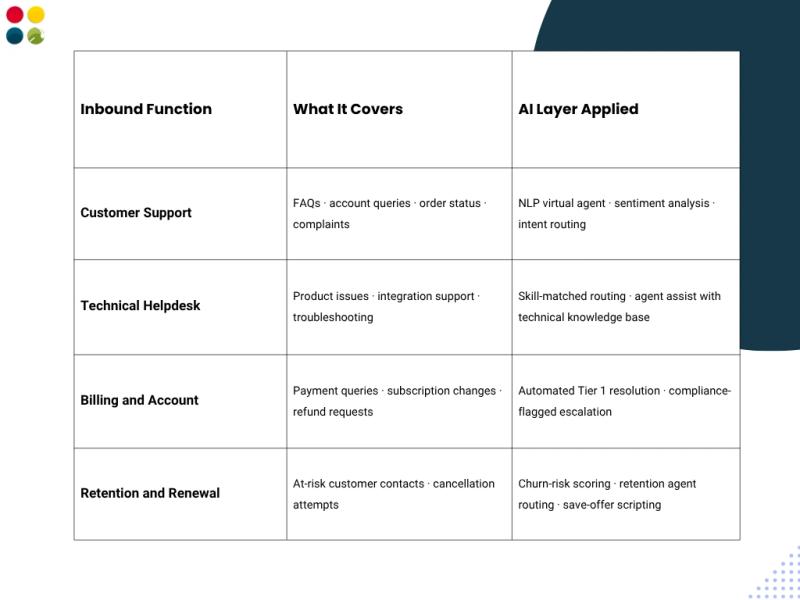
An inbound call center is your company’s front line for customer interaction. It’s where customers turn for help, making it a critical touchpoint for building loyalty and satisfaction. The primary goal is to resolve issues efficiently and leave the customer with a positive impression of your brand. To truly understand how these interactions shape perceptions, it’s essential to know what is customer experience.
Core Functions and Responsibilities of Inbound Agents
● Handling customer queries and complaints: Answering questions about products, services, or policies.
● Processing orders and payments: Assisting customers with purchases and financial transactions.
● Providing technical support and troubleshooting: Guiding users through technical issues to find a solution.
● Scheduling appointments: Booking and managing appointments for sales or service teams.
Enhancing Inbound Processes with DialDesk’s IVR and ACD
Efficiency is key in an inbound setting — wasted time leads to frustrated customers. DialDesk optimizes this with powerful tools:
● IVR Designer: The Interactive Voice Response (IVR) Designer allows you to create intelligent call flows that guide customers to the right department or agent without manual intervention.
● Automatic Call Distribution (ACD): Routes incoming calls to the most suitable agent based on skill level, availability, or language.
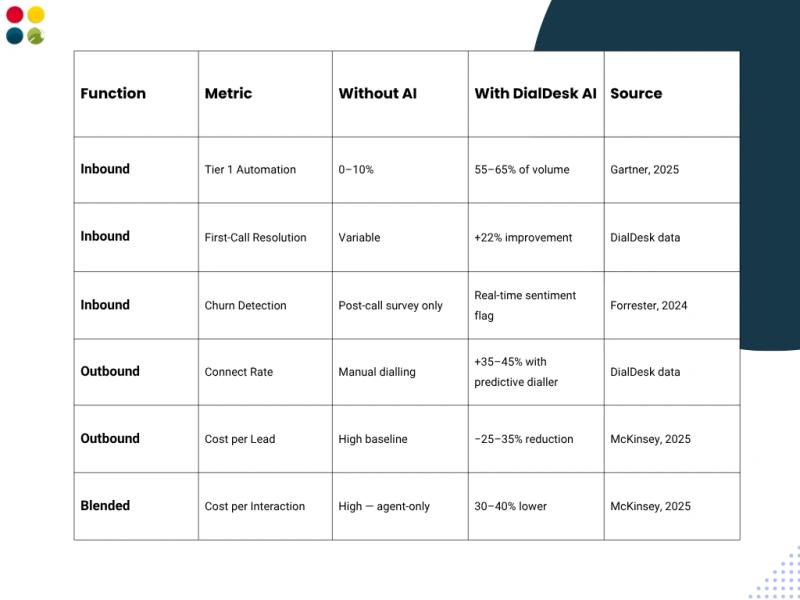
Together, these tools dramatically improve first-call resolution (FCR) rates and boost overall customer satisfaction.
Exploring the Outbound Call Center: Proactively Driving Growth
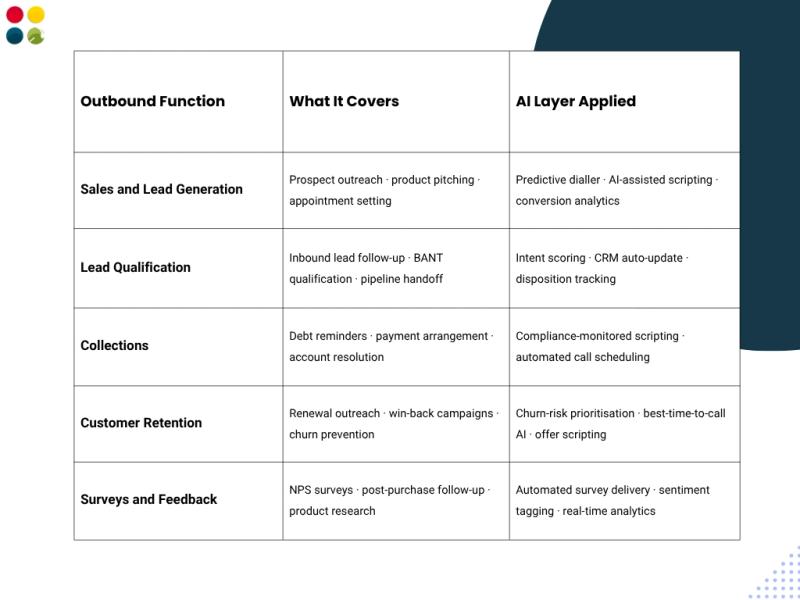
An outbound call center is a hub of proactive communication. Instead of waiting for customers to call, agents reach out to generate leads, close sales, and gather valuable market data. This model is essential for any business focused on expansion and market penetration.
Common Types of Outbound Campaigns
● Telemarketing and Telesales: Directly selling products or services over the phone.
● Lead generation and qualification: Identifying and vetting potential customers for the sales team.
● Market research and customer surveys: Gathering feedback and insights to inform business strategy.
● Appointment setting: Scheduling meetings for sales representatives with qualified leads.
For businesses that prefer to delegate these responsibilities, exploring the Benefits of Outsourcing Customer Support for Small Businesses can offer insights into cost savings, scalability, and enhanced service quality.
Maximizing Outbound Success with DialDesk’s Sales CRM
Effective outbound campaigns rely on organization and data. DialDesk’s Sales Management Solutions provide a fully customizable CRM to streamline your entire sales process.
Key features include:
● Contact Profile Management: Agents get a complete history of every customer interaction, allowing for personalized and meaningful conversations.
● Process Automation: Automate repetitive tasks like call logging and follow-up scheduling, freeing up agents to focus on selling.
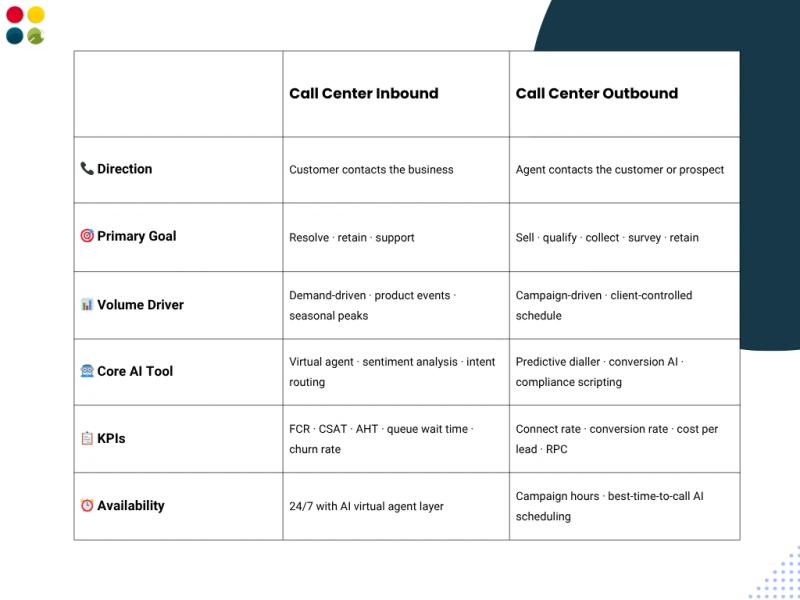
What is Inbound and Outbound Call Center Services: A Comparative Look
To better understand what is inbound and outbound call center services, it’s helpful to see them side-by-side. While their goals differ, both are vital components of a comprehensive customer communication strategy.
The Technology Powering High-Performance Call Centers
Whether inbound, outbound, or a blend of both, modern call centers depend on robust technology. Understanding the tech stack is crucial when you ask, “what is call center inbound and outbound technology?” DialDesk provides an all-in-one solution built for performance and scalability.
The Role of Cloud Contact Center Solutions
DialDesk’s Cloud Contact Center Solutions eliminate the need for costly on-premise hardware. This makes it an affordable, scalable, and reliable option for businesses of all sizes.
Key benefits include:
● Remote access for a distributed workforce.
● Reduced hardware and maintenance costs.
● Rapid deployment and easy scalability.
● Included features like Call Recording for quality assurance and training.
Unifying Communications with an Omnichannel Platform
Customers expect a consistent experience, regardless of how they contact you. DialDesk’s Omnichannel Customer Engagement platform integrates all communication channels into a single interface:
● Voice Calls
● WhatsApp & SMS
● Web Chats
● Social Media
For example, integrating WhatsApp Business API Documentation can enable businesses to handle real-time customer conversations and automate responses across one of the world’s most popular messaging platforms. This provides agents with complete context and ensures a seamless, frustration-free journey for the customer.
Using Data-driven Insights for Performance Optimization
You can’t improve what you don’t measure. DialDesk’s Analytics & Reporting Tools provide real-time visibility into your operations. With the Agent Productivity Dashboard, managers can monitor key performance indicators (KPIs) to identify trends, coach agents, and make informed decisions.
Learning how to measure customer experience is vital for understanding performance metrics that truly impact customer satisfaction and long-term loyalty.
Essential Skills for Inbound and Outbound Agents
The skill sets for inbound and outbound agents, while overlapping, have distinct areas of focus tailored to their primary objectives. Successful teams require agents with the right aptitudes for their respective roles.
The Hybrid Model: Blending Inbound and Outbound for Maximum Impact
Why choose one when you can have both? A blended or hybrid call center allows agents to handle both inbound and outbound calls. This model is highly efficient, especially for businesses with fluctuating call volumes. When inbound traffic is low, agents can switch to outbound campaigns, maximizing productivity.
A key element to success is a platform that can seamlessly manage both workflows — a major strength of DialDesk. This integrated strategy is the next evolution of what is call center inbound and outbound.
Key Benefits of an Integrated Call Center Strategy
● Increased agent productivity by reducing idle time.
● Improved customer experience with unified handling of support and follow-ups.
● Enhanced data collection creating a 360-degree view of the customer journey.
● Greater operational flexibility to adapt to changing business needs.
How DialDesk’s All-in-One Solution Transforms Your Operations?
DialDesk is more than just a software provider — we are a partner in your success. Our platform is designed with features that empower agents, inform managers, and delight customers, helping you master what is call center inbound and outbound operations.
Improving Quality with Real-Time Agent Coaching & Monitoring
Ensure consistent service quality with supervisor tools. Managers can:
● Listen-in: Monitor live calls discreetly.
● Barge: Join a call to assist an agent.
● Take-over: Assume control of a difficult call for resolution.
Our platform also includes an internal chat for agent-to-agent or agent-to-supervisor collaboration.
Achieving Scalability with Seamless 3rd Party App Integrations
Your contact center shouldn’t exist in a silo. DialDesk’s Integrations Platform allows you to connect seamlessly with popular third-party applications and existing CRMs. This ensures your technology stack evolves with your business processes.
The real value in understanding what is call center inbound and outbound lies in having a tool that can manage it all.
Choosing the Right Call Center Model for Your Business Needs
Ultimately, the choice between an inbound, outbound, or hybrid model depends on your business goals. If your priority is customer retention and service excellence, an inbound focus is critical. If growth and customer acquisition are paramount, an outbound strategy is necessary.
For many businesses, a blended approach offers the best of both worlds. The key is to have a flexible, powerful platform that supports your strategy. By understanding what is call center inbound and outbound, you can make an informed decision — and with DialDesk, you have the technology to execute it perfectly.