Customer Experience

Top CX Metrics for D2C Brands

DialDesk Team
September 17, 2025
7 min read

OVERVIEW

● This blog is a brief, action-oriented guide to the top customer experience (CX) metrics that every D2C brand should be monitoring, highlighting how successful brands across the globe use these metrics to promote growth, loyalty, and operational effectiveness.

● It discusses why CX metrics are important, unlocks which ones actually get results, and illustrates each metric with real-world brand examples from India’s top D2C ecosystem.

Introduction

What if I were to tell you that your D2C brand grows less because of how great your product is—and more because of how your customers feel when they experience you?

That’s the unsung reality about Customer Experience & Engagement in the world of D2C. Your product quality, website design, or price won’t rescue you if customers don’t like the checkout, can’t get support, or are baffled by delivery updates. The digital-first consumer of today is programmed differently—they don’t merely purchase; they experience. And they expect that experience to be seamless, personal, and instant.

That is why CX metrics are no longer “nice-to-track” numbers. They’re the survival kit for D2C brands operating in hyper-competitive markets. The right metrics measured tell you precisely where customers are smiling, where they’re losing their stride, and where you’re likely to lose them.

But here’s the thing: not every metric is created equal. Most brands are bogged down by dashboards and KPIs that are slick but don’t drive any needles. So, let’s get to the signal and talk about the key CX metrics that really drive D2C brand growth, loyalty, and revenue.

Why CX Metrics Matter for D2C Brands?

Competition is just a click away – If your customers don’t love their experience with you, they’ll defect to a competitor quicker than you can utter “cart abandoned.”

Experience = Differentiator – With all brands able to match price and product, how you make your customers feel is your moat.

Data-driven loyalty – The proper CX insights enable you to forecast churn, personalize promotions, and bring customers back for more.

Top CX Metrics Every D2C Brand Should Track (with Examples)

1. Customer Satisfaction Score (CSAT)

What it measures: Customer Satisfaction in BPO after a purchase or interaction.

Why it matters: Satisfied customers in D2C write reviews, return, and give word-of-mouth.

Brand Example: Nykaa uses post-purchase CSAT surveys to understand how satisfied customers are with delivery timelines and packaging.

2. Net Promoter Score (NPS)

What it measures: How likely customers are to recommend your brand.

Why it matters: Referrals are the hidden growth driver of a D2C brand.

Brand Example: Warby Parker uses NPS to monitor customer advocacy, so that promoters push referrals via their “Refer a Friend” program.

3. Customer Effort Score (CES)

What it measures: How easy it is to get things done (buying, tracking, returning).

Why it matters: If it takes effort to buy, customers won’t return.

Brand Example: Zappos emphasizes easy returns. Its straightforward, no-questions-asked returns policy maintains CES high and loyalty even higher.

4. Repeat Purchase Rate (RPR)

What it measures: Percentage of repeat-buying customers.

Why it matters: Customers retained are less expensive and more profitable.

Brand Example: Dollar Shave Club measures repeat buying as the center of its subscription business—easy replenishment keeps customers coming back.

5. Customer Lifetime Value (CLV)

What it measures: Total revenue generated by a customer over time.

Why it matters: CLV determines whether your CX strategy is profitable long term.

Brand Example: Lenskart uses CLV data to identify high-value customers and tailor loyalty offers (free eye check-ups, discounts on premium frames).

6. Average Resolution Time (ART)

What it measures: Speed of resolving support issues.

Why it matters: D2C customers expect fast, frictionless problem-solving.

Brand Example: Myntra uses AI-driven support to minimize ART, keeping customers from having to wait long for size swaps or refunds.

7. Churn Rate

What it measures: Customers who discontinue buying.

Why it matters: Survival is retaining customers for D2C brands.

Brand Example: Glossier tracks churn closely—when rates go up, they adjust community engagement through social media and invite-only drops.

8. Social Sentiment Score

What it measures: Customer mentions sentiment across social media.

Why it matters: It takes just a single viral complaint to dent brand trust overnight.

Brand Example: Nike (D2C e-store) leverages social listening to monitor real-time comments on product launches and adjust CX messaging in response.

9. Cart Abandonment Rate

What it measures: Percentage of customers abandoning the cart without a purchase.

Why it matters: It indicates checkout friction or trust gaps.

Brand Example: Amazon minimizes abandonment through one-click checkout, COD, wallet integration, and order tracking in real-time.

10. First Response Time (FRT)

What it measures: The speed at which support responds to customers.

Why it matters: Quick responses instill confidence, even before resolution.

Brand Example: Mamaearth uses WhatsApp API Business to deliver instant responses to customer inquiries, reducing FRT significantly.

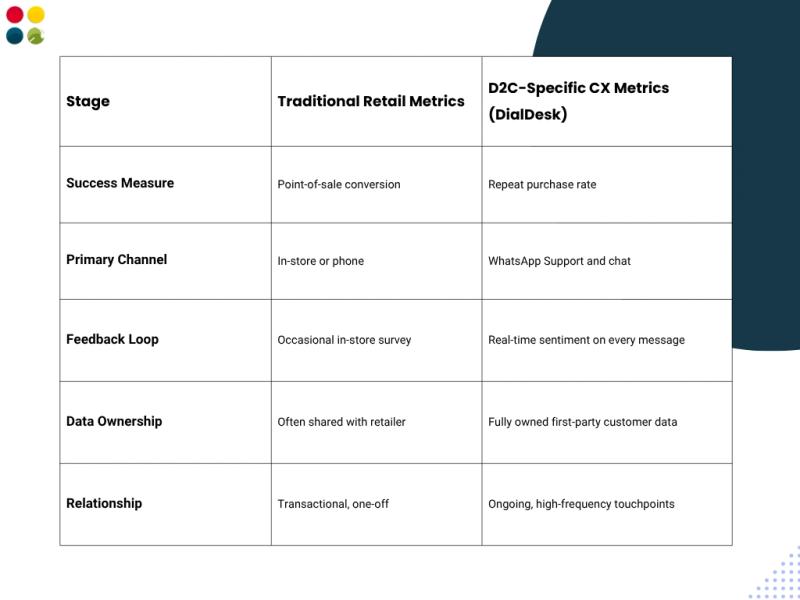
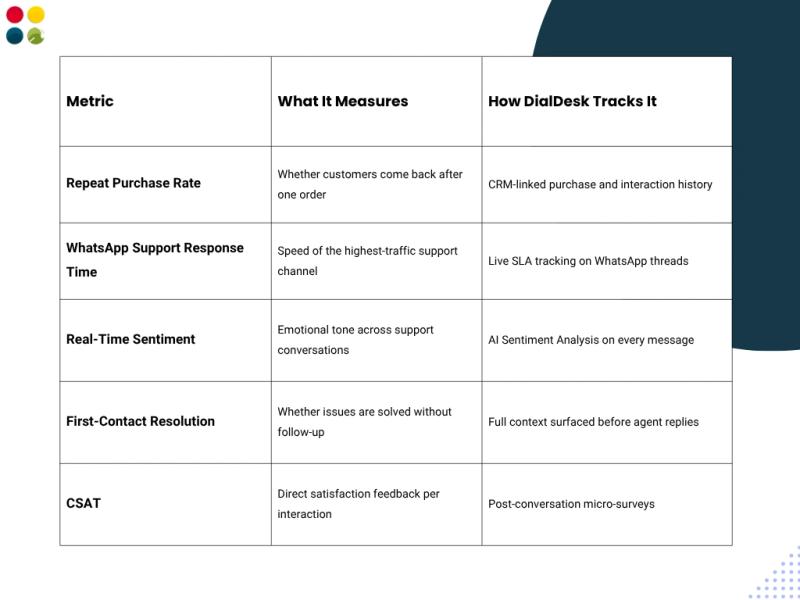
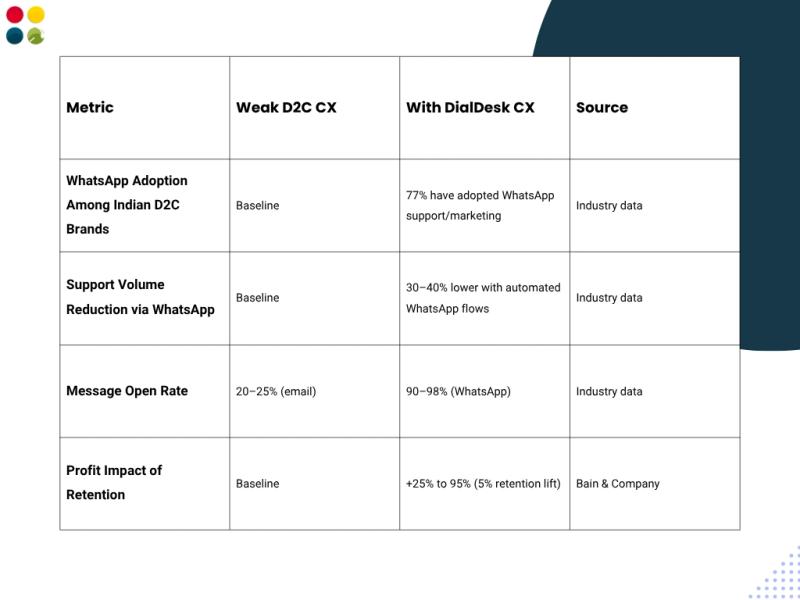
CX Metrics for D2C Brands

[@portabletext/react] Unknown block type "image", specify a component for it in the `components.types` prop

Key Takeaways

● CX metrics = growth levers, not just dashboards.

● Balance effortless shopping with personalized engagement to boost loyalty.

● Benchmark yourself against D2C leaders who excel at Customer Experience & Engagement.

Final Word

For D2C brands, CX is the brand. Your product might bring them through the door, but their experience determines whether they’ll return, repeat, and recommend. By monitoring the right CX metrics—and taking cues from industry leaders—you can transform customer journeys into growth engines.

The question isn’t “Should I measure CX metrics?” but “Which one will I improve first?”

DialDesk helps D2C brands easily monitor, analyze, and optimize CX performance through real-time AI-driven support intelligence, rapid omnichannel response automation, and customer sentiment monitoring solutions. From post-purchase automated surveys to real-time WhatsApp Support, DialDesk provides actionable analytics and personalized interaction that increase higher CSAT, reduced wait times, and repeat purchases for each customer interaction.

Ready to make your CX data matter?

Explore your customer journeys, track what counts, and measure against best-in-class D2C players—then align the metric to drive your next leap.

Frequently Asked Questions

Find answers to common questions about this topic

Share this article

About the Author

D

DialDesk Team

The DialDesk team is dedicated to helping businesses improve their customer experience through innovative solutions and insights.

Related Articles

Customer Experience

How to Manage the Customer Experience Post Sales?

Learn practical ways to enhance Customer Experience Post Sales with support, timely communication, and customer-centric strategies.

Customer Experience

How to Increase Conversion Rate in Sales?

Boost your Sales Conversion Rate with actionable sales tips, lead nurturing methods, and performance-focused strategies.

Customer Experience

How to Improve Customer Experience by Customer Service?

Explore practical tips to improve Customer Experience and build long-lasting relationships with today’s demanding customers.

Ready to Transform Your Customer Experience?

See how DialDesk can help your business deliver exceptional support

Get Weekly CX Insights

Join 1,000+ professionals receiving expert tips on customer experience and support automation.