What are Web-Enabled Services in Customer Support?
Web-Enabled Services are internet-based customer support tools — web chat, click-to-call, callback requests, and co-browsing — that let customers reach a business directly from a website or app, without dialing a phone number first. A modern Call Center for Customer Service combines web-based channels with traditional voice calling, allowing customers to choose the interaction method that suits them. At the same time, the business manages everything through a single platform.
Why Phone-Only Support No Longer Matches How Customers Browse and Buy
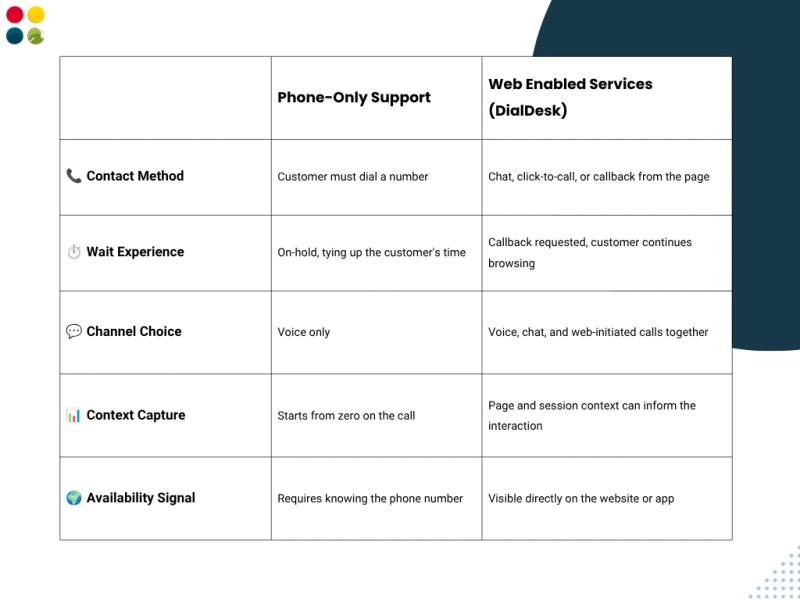
Customers researching a product or troubleshooting an issue are almost always already on a website when the need for support arises. Forcing them to leave that page, find a phone number, and dial in adds unnecessary friction at exactly the moment they need help.
Web Enabled Services remove that friction by letting the customer request help directly from the page they're on — a chat window, a callback button, or a click-to-call link — rather than starting a separate phone interaction from scratch.
Customer Service Companies that still rely solely on a listed phone number are asking customers to do more work to get help than the website experience otherwise requires, which shows up as lower engagement and more abandoned support attempts.
💡 Why It Matters
Customers offered a web callback option instead of waiting on hold report meaningfully higher satisfaction with the support experience, even when total resolution time is similar (Digital CX Report, 2025).
What Web-Enabled Services Add to a Call Center for Customer Service
How Web-Enabled Services Integrate With Existing Call Center Infrastructure
Call Center for Customer Service platforms that support Web-Enabled Services connect website-initiated requests directly into the same routing and agent system used for phone calls.
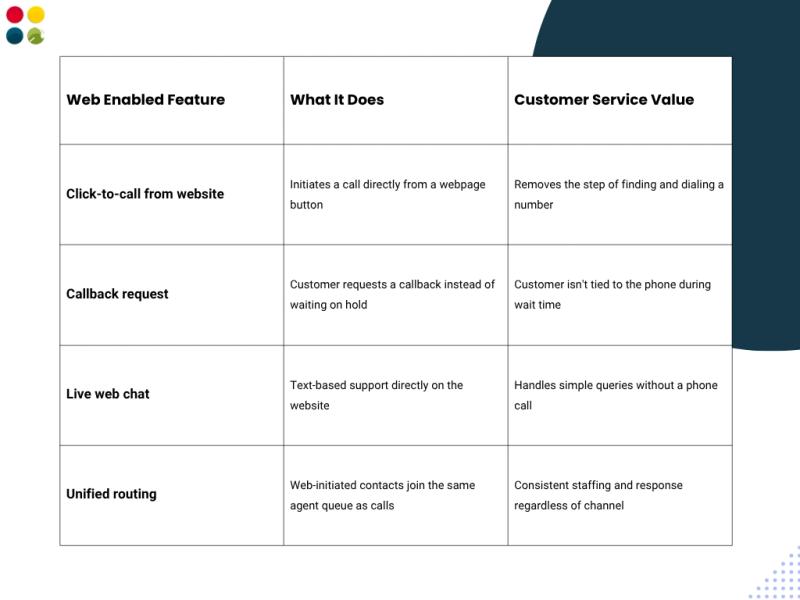
This integration is what separates genuine Web Enabled Services from a disconnected chat widget bolted onto a website — the web channel and the phone channel share the same underlying support system.
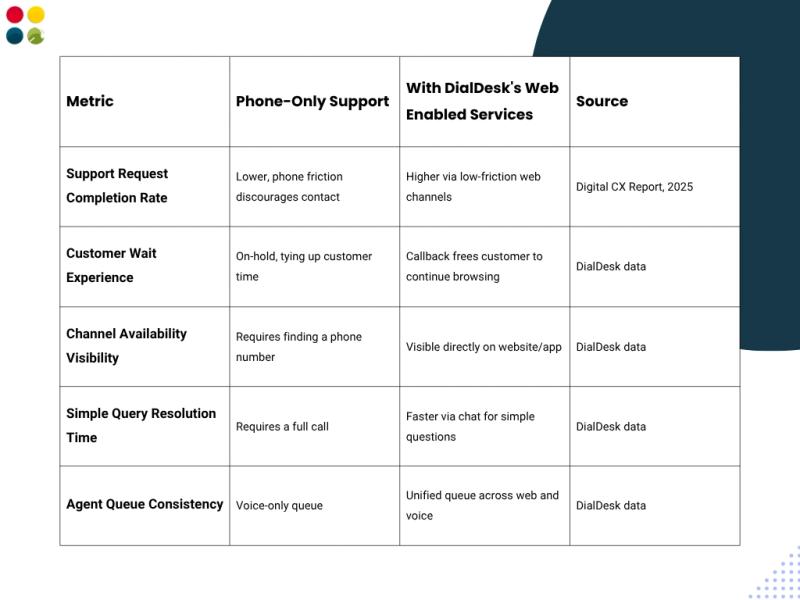
Business Impact: The Numbers Behind Web Enabled Customer Service
Customer Service Companies offering Web Enabled Services alongside voice support see measurable engagement improvements (Digital CX Report, 2025).
✅ Trusted by 500+ Customer Service Companies Across India
DialDesk's Web-Enabled Services run on infrastructure that is ISO 9001:2015 and ISO 27001:2013 certified — secure, unified with voice calling. See our full call center software India platform.
Key Takeaways
● Phone-only support adds unnecessary friction for customers who are already on a website when they need help.
● Web-Enabled Services — chat, click-to-call, callback — let customers get help directly from the page they're on.
● The strongest implementations connect web-initiated contacts to the same agent queue used for phone calls.
● Callback options reduce the burden of hold-time waiting compared to traditional phone-only support.
● DialDesk unifies Web Enabled Services with voice calling on one ISO-certified platform.
Conclusion
Web-Enabled Services close the gap between how customers actually browse and buy online and how they're expected to reach support — removing the friction of finding a phone number when help is needed.
Customer Service Companies that still rely solely on phone support are asking customers to do more work than the rest of their digital experience requires. Adding web-based channels, integrated with existing voice infrastructure, meets customers where they already are.
Explore how DialDesk's Web-Enabled Services connect with your CRM integration and Call Analytics stack for a unified support experience across web and voice.
Help should be as easy to reach as the website itself. DialDesk makes that possible.
📅 Want to Add Web-Enabled Services to Your Support Strategy?
DialDesk unifies click-to-call, chat, and callback requests with your voice calling infrastructure in one platform. Join 500+ Customer Service Companies across India already reducing support friction with DialDesk.