OVERVIEW
Great customer experience doesn’t happen by accident. It’s trained, reinforced, and measured.
Many companies invest in tools and campaigns but overlook the most critical element—people.
This blog explains how to train teams to consistently deliver excellent customer experience, especially in fast-growing Indian startups and D2C brands. We’ll cover what to train, how to train, common mistakes, and how CX partners like DialDesk help companies scale quality without constant retraining.
Introduction
Customers don’t remember policies.
They remember conversations.
A well-trained team can turn a frustrated customer into a loyal advocate. An untrained one can undo months of brand-building in a single call.
According to PwC, 32% of customers leave a brand they love after just one bad experience.
Training isn’t about scripts. It’s about judgment, empathy, and clarity—especially in customer-facing roles.
Why Traditional Customer Service Training Fails?
Most training programs focus on:
● Scripts over understanding
● Product knowledge over problem-solving
● Speed over resolution quality
Result: Agents sound polite but ineffective. Customers feel heard but not helped.
Learn more about what is customer experience management and how it helps businesses understand customer journeys, improve every interaction, and build long-term brand loyalty through consistent, meaningful experiences.
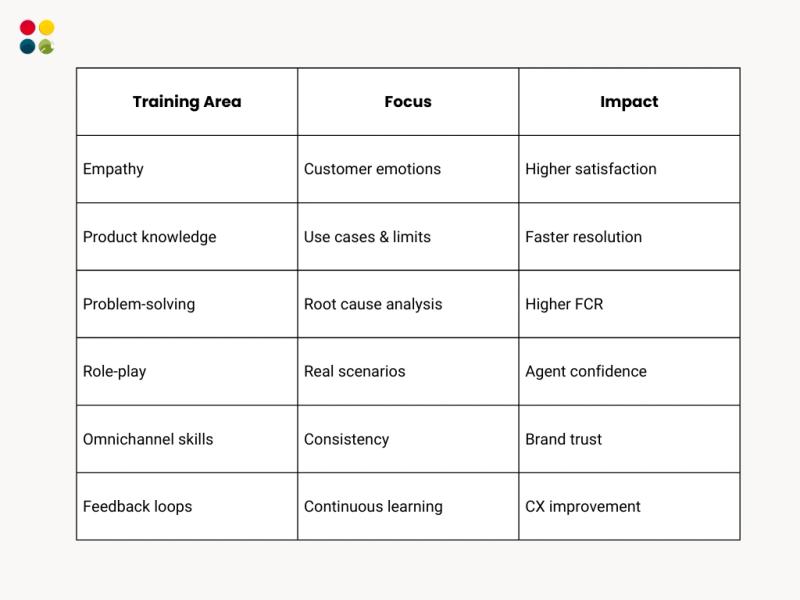
Pillar 1: Train for Customer Understanding First
Before tools and processes, teams must understand:
● Who the customer is
● Why they’re reaching out
● What success looks like for them
Training focus:
● Customer personas
● Common pain points
● Emotional states during interactions
McKinsey Insight: Empathy-based training improves Customer Experience by up to 40%.
Pillar 2: Build Strong Product and Process Knowledge
Confidence comes from clarity.
What to train:
● Product use cases
● Limitations and exceptions
● Refunds, replacements, escalations
● Internal workflows
Best Practice: Create a searchable knowledge base and update it weekly.
DialDesk Angle: DialDesk maintains centralized knowledge repositories so agents stay updated across campaigns and brands.
Pillar 3: Teach Resolution, Not Just Response
Responding is easy. Resolving is harder.
Train agents to:
● Ask clarifying questions
● Identify root causes
● Own the issue end-to-end
Metric to Track: First Call Resolution (FCR)
Data Point: Companies with high FCR see higher loyalty and lower support costs (Zendesk).
Pillar 4: Role-Play Real Scenarios
Simulations outperform lectures.
Effective role-play includes:
● Angry customers
● Confused first-time users
● Escalation situations
● Multi-channel transitions (Call → WhatsApp)
Outcome: Agents build confidence before facing real customers.
Pillar 5: Train for Omnichannel Consistency
Customers expect the same experience everywhere.
What to align:
● Tone and language
● SLAs
● Escalation rules
DialDesk Angle: DialDesk trains agents across voice, WhatsApp, email, and chat—ensuring consistent CX regardless of channel.
Learn more about how to improve customer experience by aligning people, processes, and technology to deliver personalized, consistent, and memorable interactions that build long-term customer loyalty.
Pillar 6: Use Feedback and Data to Improve Training
Training isn’t one-time.
Inputs for continuous improvement:
● Call audits
● NPS comments
● Customer complaints
● Agent performance metrics
DialDesk Angle: DialDesk uses AI-led call auditing and sentiment analysis to identify training gaps and coach agents proactively.
CX Training Framework
Thoughts to Ponder
● Do your agents understand customers or just scripts?
● Is training ongoing or event-based?
● Are Good Customer Experience insights fed back into training programs?
● Can your training scale with growth?
Key Takeaways
● Excellent CX is built through structured training
● Empathy and problem-solving matter more than scripts
● Omnichannel consistency is critical
● Feedback should guide continuous improvement
● DialDesk enables scalable Customer Experience Management training and quality control
Conclusion
Customer experience lives in conversations. Training teams to handle those conversations well is one of the highest ROI investments a company can make.
Wrap Up
Train people to think, not just respond. When teams are empowered, customers feel valued—and loyalty follows.
Want trained CX professionals without building large internal teams?
DialDesk provides brand-aligned, trained agents with ongoing quality audits.
Deliver excellent customer experience — every interaction.