How Do You Set Up Cloud Telephony for a Startup?
Setting up Cloud Telephony for a startup involves choosing a provider, activating a virtual business number, configuring a basic IVR flow, and connecting the system to a CRM or spreadsheet, all done through an online dashboard, with no hardware or IT team required. Most startups can go from signup to answering live calls within a single day using DialDesk.
Why Startups Shouldn't Wait to Set Up a Proper Phone System
Early-stage startups often run customer calls through a founder's personal number, with no recording, no routing, and no record of what was promised to a customer. It works until the team grows past two or three people, then it breaks down fast.
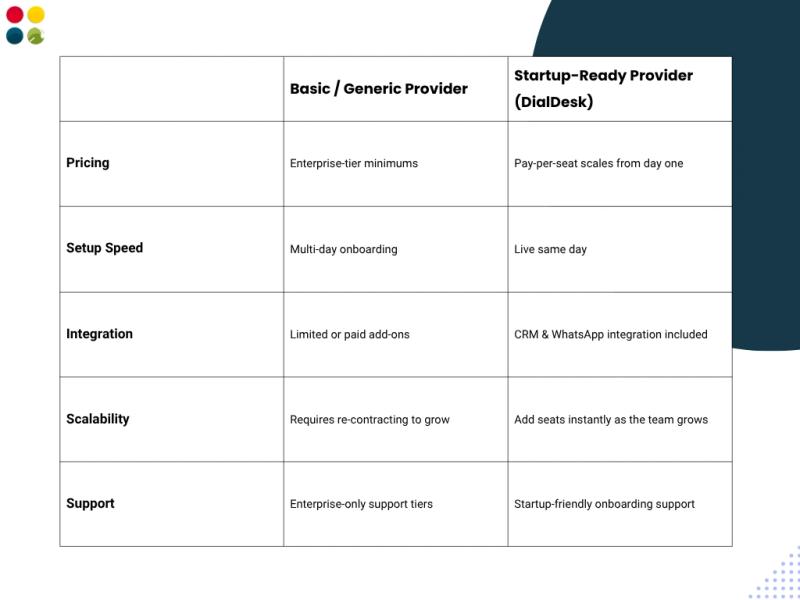
Choosing among Cloud Telephony Providers in India early, before the team scales, means the phone system grows with the startup instead of becoming a scramble to fix once call volume spikes.
Cloud Telephony gives even a two-person startup a professional number, call recording, and basic routing from day one, at a cost that doesn't require a funding round to justify.
💡 Why It Matters
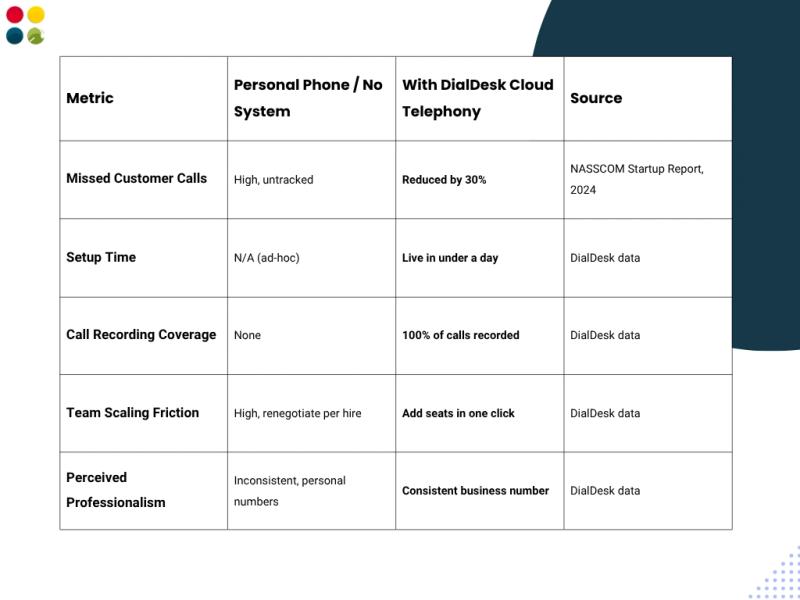
Startups that establish structured calling infrastructure before scaling report 30% fewer missed customer calls during their first year of rapid growth (NASSCOM Startup Report, 2024).
What to Look for When Choosing Cloud Telephony Providers in India
How to Set Up Cloud Telephony for Your Startup, Step by Step
Getting a virtual business number live doesn't require a technical background; most of the setup happens through a guided dashboard.
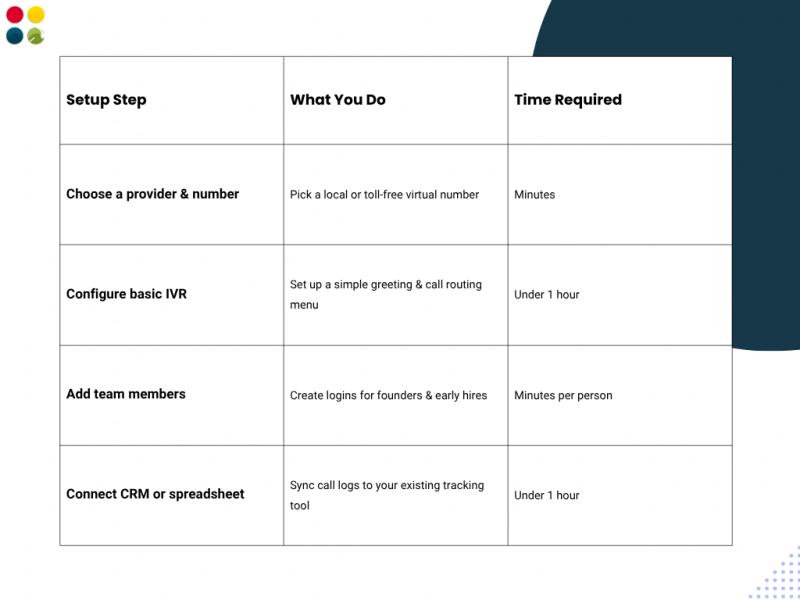
By the end of day one, a startup has a working Cloud Telephony setup that looks and functions like a company ten times its size.
Business Impact: The Numbers Behind Early Cloud Telephony Adoption
Startups that set up Cloud Telephony early see measurable gains in customer responsiveness and professionalism (NASSCOM Startup Report, 2024).
✅ Trusted by 500+ Startups and Growing Teams Across India
DialDesk's Cloud Telephony platform is ISO 9001:2015 and ISO 27001:2013 certified — enterprise-grade reliability priced for startup budgets. See our full call center software India platform.
Key Takeaways
● Startups relying on a founder's personal number lose call records, routing, and consistency as they grow.
● Choosing the right Cloud Telephony Providers in India early avoids a costly re-setup later.
● A basic Cloud Telephony setup — number, IVR, CRM sync- can go live within a single day.
● Early adoption reduces missed calls and gives even small teams a professional presence.
● DialDesk scales pricing and seats with the startup, with no enterprise minimums.
Conclusion
Cloud Telephony is one of the few pieces of infrastructure a startup can set up in a single day that pays off from the very first customer call.
Waiting until call volume becomes unmanageable to fix a phone system means losing calls, losing consistency, and losing the professional impression that wins early customers. Startups that set this up early scale without that scramble.
Explore how DialDesk's Cloud Telephony platform connects with your CRM integration, IVR, and call routing stack to give your startup a professional communication system from day one.
Your first customer call deserves a system, not a personal number. DialDesk makes that easy.
📅 Want to Set Up Cloud Telephony for Your Startup?
DialDesk's Cloud Telephony platform gets your startup a professional number, IVR, and CRM sync live within a day, no hardware, no long contracts. Join 500+ startups across India already scaling with DialDesk.