What is a Cloud Telephony Solution and How Does it Work?
A Cloud Telephony Solution is a complete business calling system: numbers, routing, recording, and integrations — delivered as a hosted Telephony Service over the internet rather than through on-site hardware. It works by combining a virtual number, IVR routing rules, and agent devices connected through a provider's cloud infrastructure, so calls are managed, recorded, and analysed automatically without a physical PBX box.
Why 'Solution' Means More Than Just a Phone Line
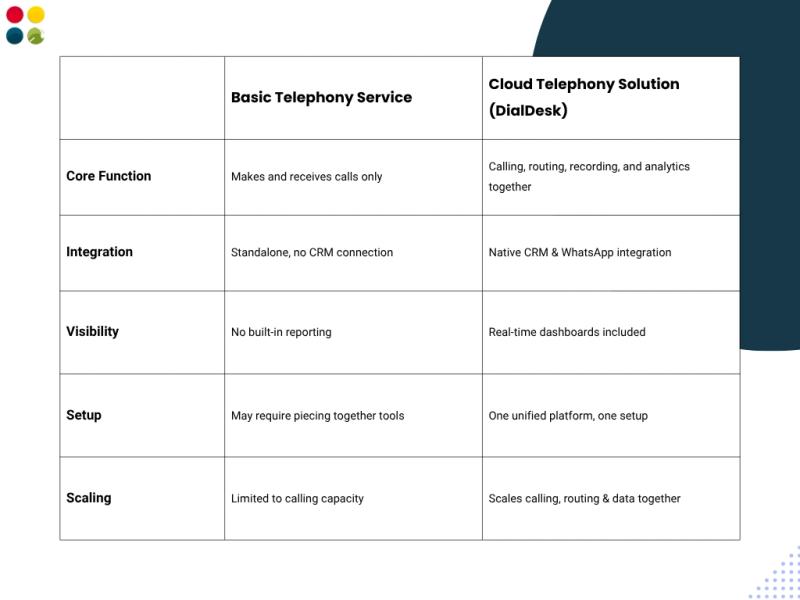
The word "solution" matters here. A basic internet-based calling app connects calls; a Cloud Telephony Solution is built to solve a business problem, managing customer communication reliably, at scale, with visibility into what's happening.
A standalone Telephony Service that only makes and receives calls leaves a business to solve routing, recording, and reporting separately, often through multiple disconnected tools.
Cloud Telephony Solutions bundle these pieces, numbers, routing, recording, and integrations into one coherent system, which is why the distinction between a basic service and a full solution matters when evaluating options.
💡 Why It Matters
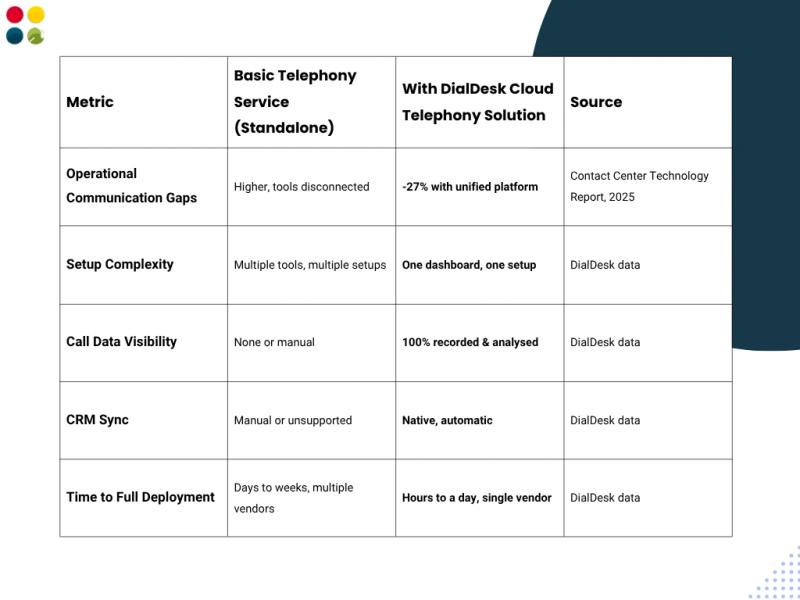
Businesses that adopt a complete Cloud Telephony Solution rather than piecing together separate calling and reporting tools report 27% fewer operational gaps in customer communication (Contact Center Technology Report, 2025).
What is a Cloud Telephony Solution vs a Basic Telephony Service
How a Cloud Telephony Solution Works, Piece by Piece
Understanding Cloud Telephony Services as a system, not a single feature, makes it clear how each component contributes to the whole.
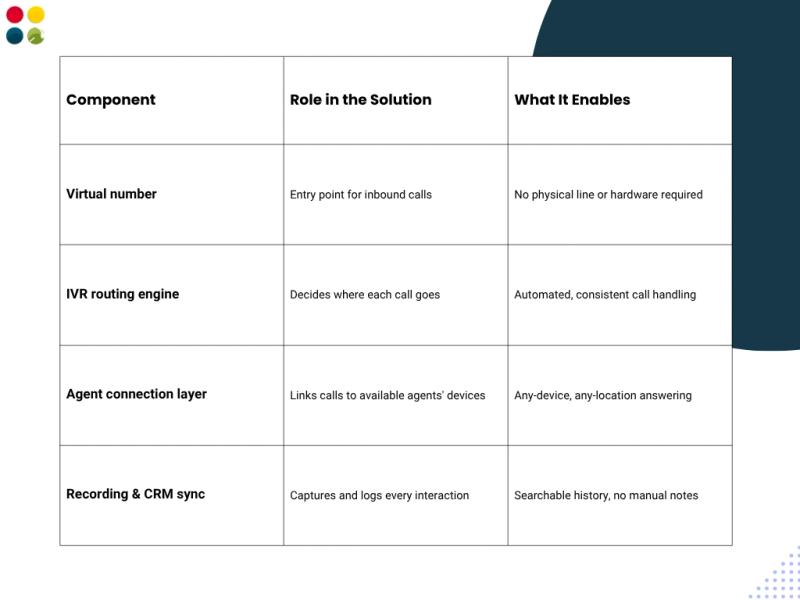
Together, these components form what makes a Cloud Telephony Solutions offering a system rather than a single tool — each piece depends on the others to deliver the full business value.
Business Impact: The Numbers Behind Adopting a Complete Solution
Businesses using a complete Cloud Telephony Solution see measurable gains over piecing together separate tools (Contact Center Technology Report, 2025).
✅ Trusted by 500+ Contact Centers Across India
DialDesk's Cloud Telephony Solutions platform is ISO 9001:2015 and ISO 27001:2013 certified — a complete, unified system, not a patchwork of separate tools. See our full call center software India platform.
Key Takeaways
● A Cloud Telephony Solution differs from a basic Telephony Service by bundling routing, recording, and integrations into one system.
● Piecing together separate calling and reporting tools creates operational gaps that a unified solution avoids.
● The core components: virtual number, IVR, agent connection, and recording work together, not in isolation.
● Businesses using a complete solution report significantly fewer communication gaps than those using standalone services.
● DialDesk delivers all these components as one ISO-certified Cloud Telephony Solution.
Conclusion
A Cloud Telephony Solutions offering earns the word "solution" by solving the full communication problem, not just connecting calls, but routing, recording, and integrating them into how a business actually operates.
Businesses that settle for a basic Telephony Service often end up assembling the rest of the solution themselves, piece by piece, at a higher cost in time and operational gaps than choosing a unified platform from the start.
Explore how DialDesk's Cloud Telephony Solutions platform connects with your CRM integration, IVR, and call routing stack as one complete system.
A solution solves the whole problem, not just part of it. That's what DialDesk delivers.
📅 Ready for a Complete Cloud Telephony Solution?
DialDesk bundles calling, routing, recording, and CRM integration into one unified Cloud Telephony Solutions offering, with no piecing together separate tools. Join 500+ contact centers across India already running on DialDesk.