What is Cloud Telephony?
Cloud Telephony is a phone system hosted entirely on the cloud that lets sales teams make and receive calls from any device, anywhere, without on-site hardware or landlines. It gives remote reps a single business number, call recording, live analytics, and Cloud Telephony Integration with CRM tools, turning any laptop or phone into a fully connected sales extension in seconds.
Why Remote Sales Teams Can't Run on a Legacy Phone System
Sales used to happen inside an office, on a desk phone tied to a physical line. That model breaks the moment a team goes remote. Reps working from home, co-working spaces, or client sites need a number that follows them, not an extension chained to a building.
Teams rarely lose deals because they lack leads. They lose deals because calls go unanswered, follow-ups get lost across personal phones, and managers have no visibility into what's actually said on sales calls. This is the gap where Remote Sales Teams quietly under-perform, not from lack of effort, but from lack of infrastructure.
Cloud Telephony, paired with proper Cloud Telephony Integration into a CRM, closes this gap. It gives every rep a professional number, records every call automatically, and surfaces performance data managers can act on the same day, not at quarter's end.
💡 Why It Matters
Remote and hybrid sales reps using a cloud-based dialer close 27% more deals per month than those relying on personal mobile phones (Salesforce State of Sales, 2024).
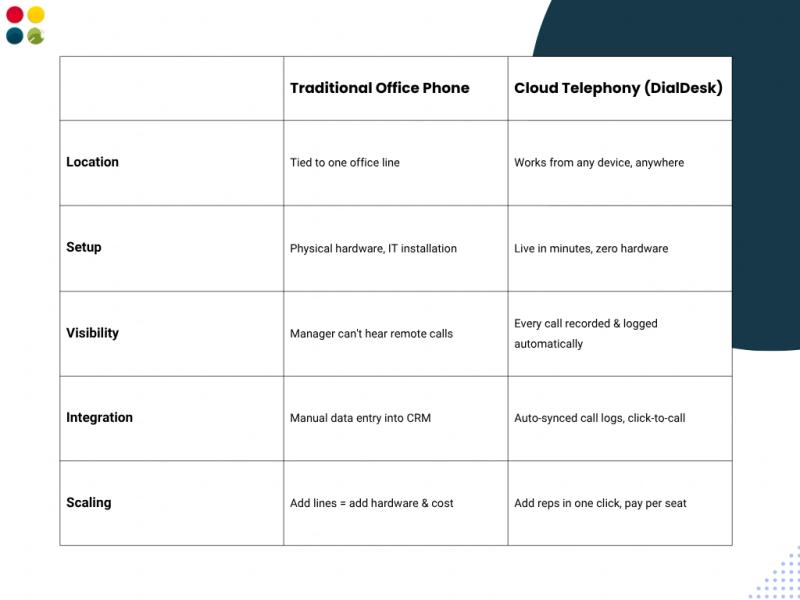
What Makes Cloud Telephony Different for Distributed Sales Teams
How Cloud Telephony Integration Powers the Remote Sales Workflow
Telephony Cloud Integration means connecting the calling layer directly into the tools reps already use, CRM, WhatsApp, and email, so no call, note, or follow-up gets lost between systems.
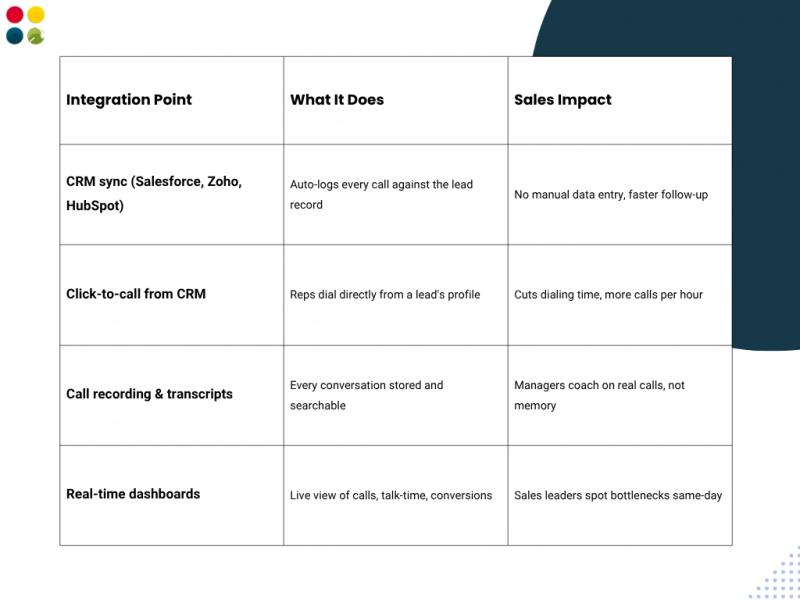
This is what separates a phone number from a sales system. Cloud Telephony Integration converts a call from a one-time event into a permanent, searchable, coachable data point.
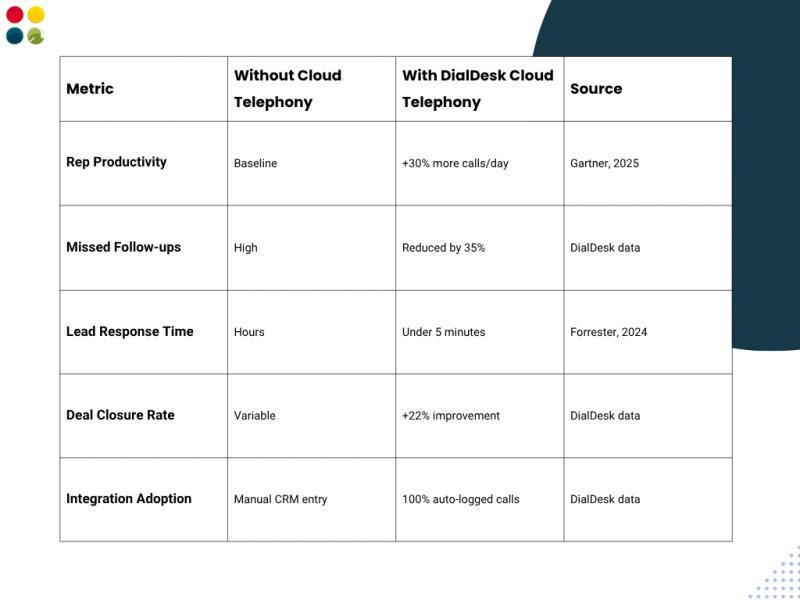
Business Impact: The Numbers Behind Remote Sales Productivity
Cloud Telephony is not a convenience upgrade, it changes what a distributed sales team can measure and improve (Gartner, 2025).
✅ Trusted by 500+ Sales & Support Teams Across India
DialDesk's Cloud Telephony platform is ISO 9001:2015 and ISO 27001:2013 certified — enterprise-grade infrastructure built for India's distributed sales teams. See our full call center software India platform.
Key Takeaways
● Remote sales teams lose deals to missed calls and lost follow-ups more often than to a lack of leads.
● Cloud Telephony gives every rep a single number that works from any device, anywhere, with zero hardware.
● Cloud Telephony Integration connects calling directly to the CRM, auto-logging every call and enabling click-to-call.
● Managers get live visibility into calls, talk-time, and conversions instead of quarter-end reports.
● DialDesk reps close more deals with faster lead response and zero manual data entry.
Conclusion
Cloud Telephony is not a future upgrade for remote sales teams, it is the baseline infrastructure that decides whether a distributed team performs like one connected unit or a group of reps working in isolation.
Leads don't wait for a rep to be at their desk. The teams that respond fastest, follow up consistently, and give managers real visibility are the ones closing deals — not the ones with the biggest headcount.
Explore how DialDesk's Cloud Telephony platform connects with your CRM integration and WhatsApp and chat support stack to give your remote sales team one unified system from day one.
Distance shouldn't cost you deals. DialDesk keeps remote sales teams connected.
📅 Want to Connect Your Remote Sales Team?
DialDesk's Cloud Telephony platform gives every remote rep a professional number, automatic call logging, and live CRM sync, so no lead ever gets lost between systems. Join 500+ sales and support teams across India already scaling with DialDesk.