What is the Difference Between Cloud Telephony and Traditional Telephony?
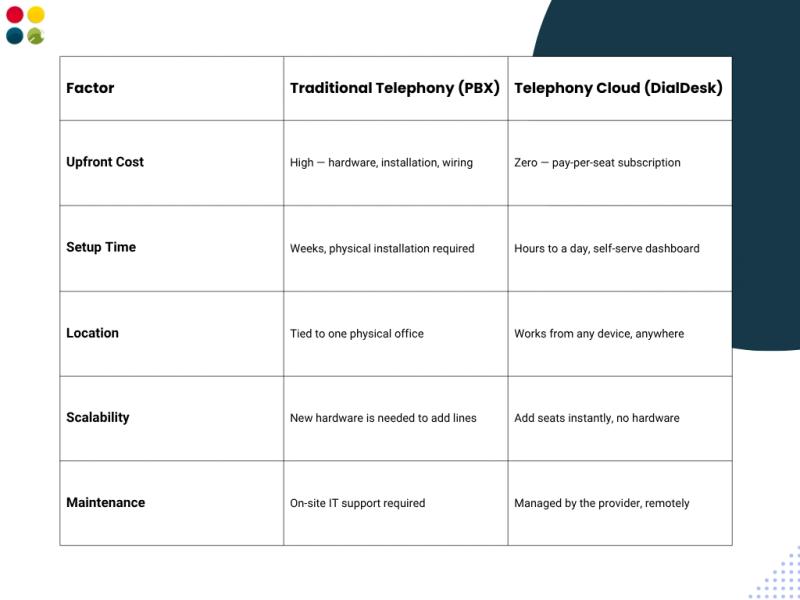
Telephony Cloud runs a business phone system over the internet using shared, remotely hosted infrastructure, while traditional telephony relies on physical PBX hardware, copper wiring, and on-site servers installed at a single office. Cloud Telephony Services eliminate hardware costs and installation time, letting businesses make and receive calls from any device, while traditional systems tie calling to one physical location and require ongoing hardware maintenance.
Why Businesses Are Rethinking How They Compare Phone Systems
For decades, choosing a business phone system meant choosing a PBX vendor, signing off on hardware, and scheduling an installation crew. That was simply how phone systems worked until internet-based calling made the entire hardware layer optional.
The comparison between Telephony Cloud and traditional systems isn't just about where the hardware sits. It changes cost structure, setup time, scalability, and even where employees can physically work from.
Cloud Telephony Services replace the PBX box, copper lines, and desk phones with software running on shared cloud infrastructure, the same underlying shift that moved email, storage, and accounting software off local servers years ago.
💡 Why It Matters
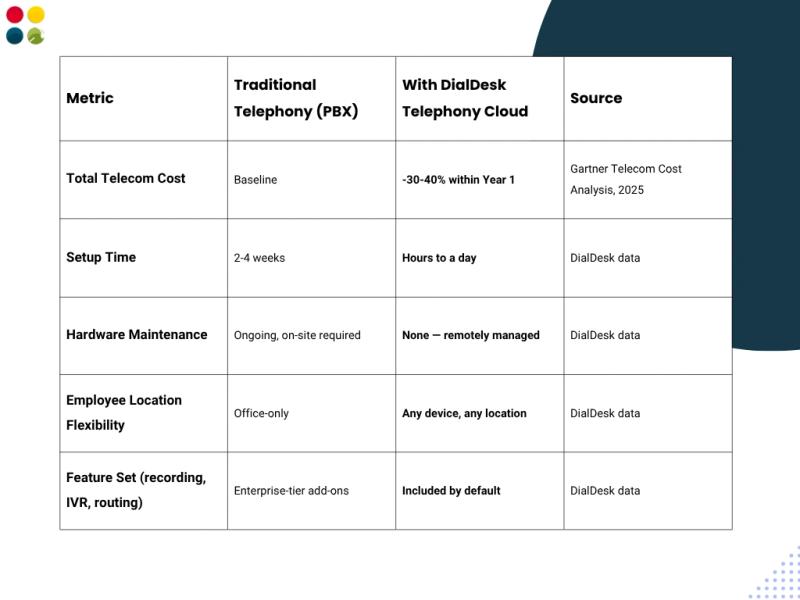
Businesses that switch from traditional PBX to cloud telephony report an average 30-40% reduction in total telecom costs within the first year (Gartner Telecom Cost Analysis, 2025).
Telephony Cloud vs Traditional Telephony: Feature-by-Feature Comparison
How VoIP Technology Makes Telephony Cloud Possible
Understanding the shift from a traditional PBX system to the cloud starts with the underlying technology: VoIP, which converts voice into data packets sent over the internet instead of dedicated phone lines.
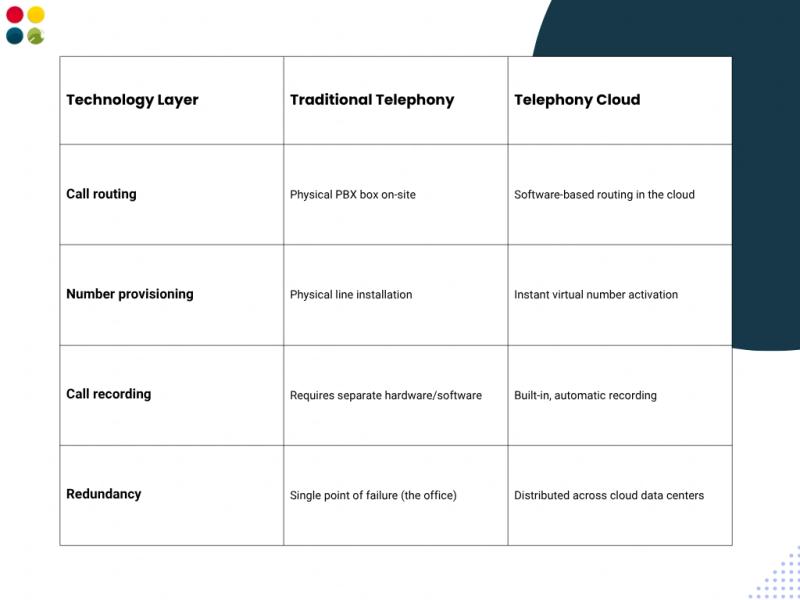
This underlying architecture is why Telephony Cloud can offer features that were once enterprise-only, like call recording and multi-location routing, at a fraction of the traditional cost.
Business Impact: The Numbers Behind Cloud Telephony vs Traditional Systems
Businesses making the switch from traditional telephony to cloud-based systems see measurable cost and efficiency improvements (Gartner, 2025).
✅ Trusted by 500+ Contact Centers Across India
DialDesk's Telephony Cloud platform is ISO 9001:2015 and ISO 27001:2013 certified — modern infrastructure businesses can trust as they move off legacy PBX. See our full call center software India platform.
Key Takeaways
● Traditional telephony ties a business to physical hardware, one location, and ongoing maintenance costs.
● Telephony Cloud replaces hardware with shared cloud infrastructure, cutting cost and setup time significantly.
● Cloud Telephony Services include features like call recording and IVR that were once enterprise-only add-ons.
● VoIP technology is the foundation that makes location-independent, software-based calling possible.
● DialDesk delivers measurable cost savings and flexibility over traditional PBX within the first year.
Conclusion
The comparison between Telephony Cloud and traditional telephony isn't close anymore; the shift away from physical hardware has become the default path for businesses that want flexibility without the maintenance burden.
Businesses still running on traditional PBX systems are often paying more for less: higher upfront cost, slower scaling, and infrastructure tied to a single office. The switch to Cloud Telephony Services removes all three constraints at once.
Explore how DialDesk's Telephony Cloud platform connects with your Cloud Telephony Integration and IVR and call routing stack to see what a modern comparison actually looks like in practice.
The comparison is over. Cloud won. DialDesk makes the switch simple.
📅 Ready to Compare Telephony Cloud for Your Business?
DialDesk's Telephony Cloud platform replaces your PBX hardware with a system that's faster to set up, cheaper to run, and works from anywhere. Join 500+ contact centers across India already making the switch with DialDesk.