Is Cloud Telephony Reliable, Expensive, and Complex to Set Up?
No, these are the three most common myths about Cloud Telephony. Modern Cloud Telephony Systems run on redundant cloud infrastructure with uptime guarantees higher than most on-premise setups, cost less than traditional PBX systems since there's no hardware to buy, and can be set up in hours through a dashboard, without dedicated IT staff. DialDesk's platform addresses all three concerns directly with certified infrastructure and no-code setup.
Why Cloud Telephony Myths Still Hold Businesses Back
Many businesses still associate cloud-based systems with the early, unreliable VoIP tools from over a decade ago, dropped calls, poor audio, and confusing setup. That reputation has stuck around long after the technology moved past it.
These outdated assumptions cause businesses to stick with expensive, hardware-heavy phone systems, missing out on what a modern Cloud Telephony System actually offers: better reliability, lower cost, and faster setup than the legacy alternative.
Cloud Telephony today runs on enterprise-grade cloud infrastructure with redundancy built in, the same class of infrastructure that powers banking and e-commerce platforms, not the consumer VoIP apps the myths are based on.
💡 Why It Matters
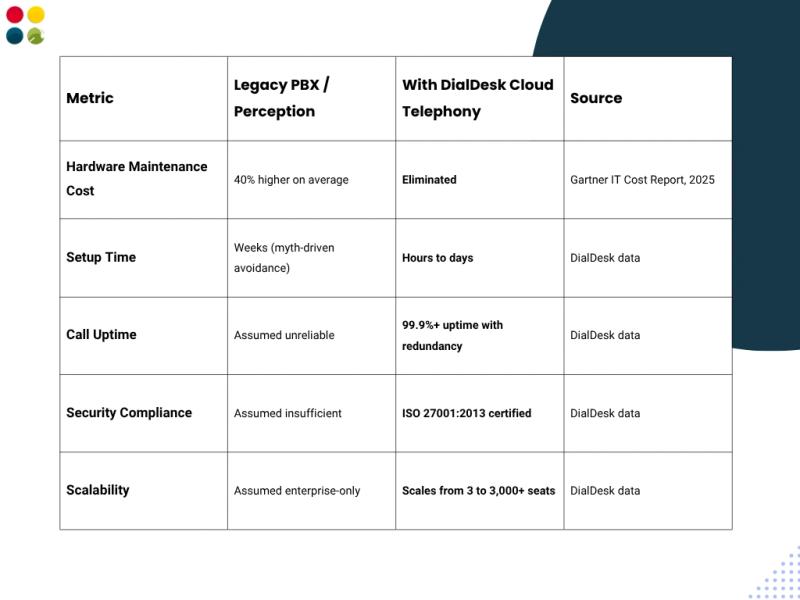
Businesses that delay adopting Cloud Telephony due to outdated reliability concerns spend an average of 40% more on hardware maintenance than those on modern cloud platforms (Gartner IT Cost Report, 2025).
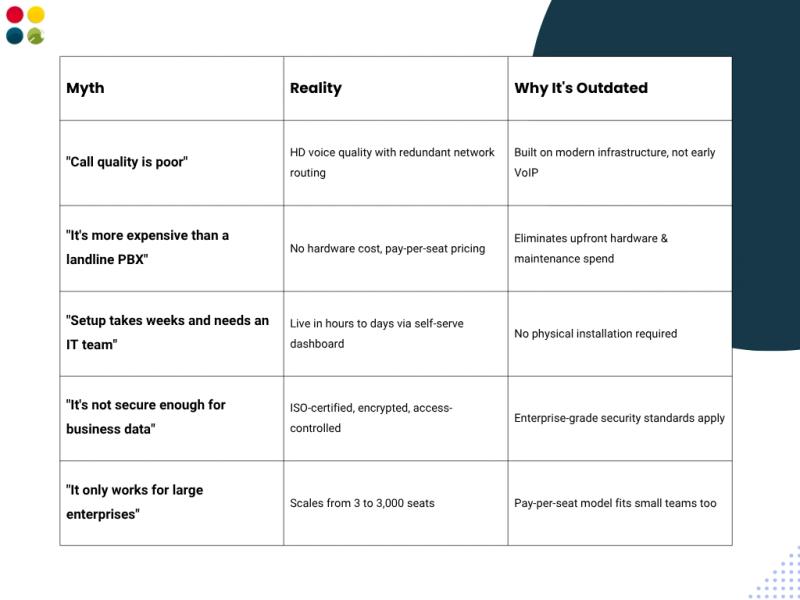
How Modern Cloud Telephony Systems Solved the Old Problems
The gap between the myth and the reality comes down to infrastructure; a modern Cloud Telephony System is built differently from the tools that created these myths in the first place.
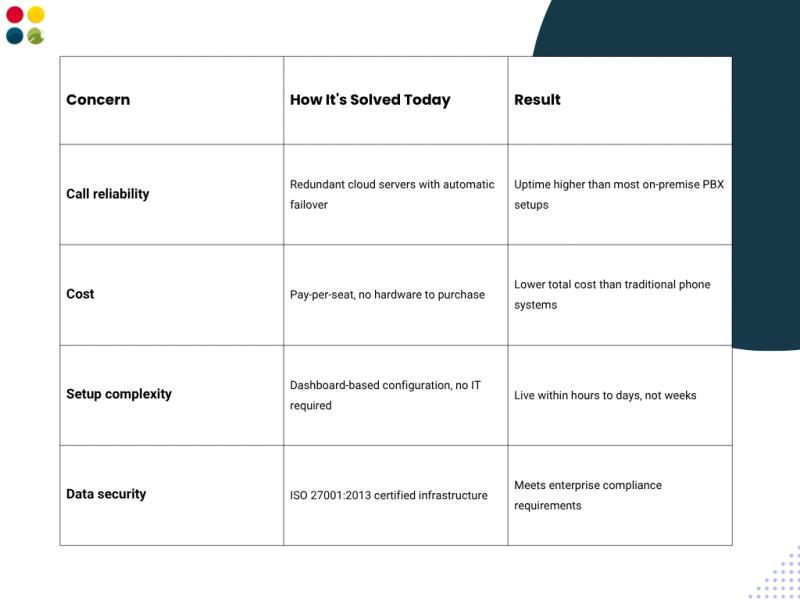
Once these structural improvements are understood, most objections to Cloud Telephony turn out to be based on technology that no longer exists in a serious provider's product.
Business Impact: The Numbers Behind Modern Cloud Telephony Adoption
Businesses that move past these myths and adopt Cloud Telephony see measurable cost and reliability improvements (Gartner, 2025).
✅ Trusted by 500+ Contact Centers Across India
DialDesk's Cloud Telephony platform is ISO 9001:2015 and ISO 27001:2013 certified — real infrastructure, not the outdated tools these myths are based on. See our full data security and compliance framework.
Key Takeaways
● Cloud Telephony myths are based on outdated, early-generation VoIP tools, not modern platforms.
● Modern Cloud Telephony System deployments run on redundant infrastructure with higher uptime than many on-premise setups.
● Pay-per-seat pricing makes Cloud Telephony cheaper than legacy PBX once hardware costs are factored in.
● Setup takes hours to days through a dashboard, not weeks with an IT team.
● DialDesk's ISO-certified infrastructure directly addresses the security concerns behind these myths.
Conclusion
Most objections to Cloud Telephony are really objections to a version of the technology that stopped existing years ago.
Businesses still avoiding a Cloud Telephony System over cost, reliability, or security concerns are often paying more, in hardware maintenance, slower setup, and missed flexibility, to stick with an outdated alternative.
Explore how DialDesk's Cloud Telephony platform connects with your Cloud Telephony Integration, IVR, and call routing stack to see what a modern setup actually looks like.
The myths are outdated. The technology isn't. DialDesk proves it.
📅 Want to See What Modern Cloud Telephony Actually Looks Like?
DialDesk's Cloud Telephony platform delivers HD call quality, ISO-certified security, and setup in hours — not the outdated experience these myths describe. Join 500+ contact centers across India already running on modern cloud infrastructure with DialDesk.