What is Call Analytics?
Call Analytics is the practice of measuring and interpreting data from every phone call, call volume, duration, talk-to-listen ratio, resolution rate, and sentiment, to understand team performance and customer experience. In Cloud Telephony, Call Analytics runs automatically in the background, turning every call into a data point managers can act on the same day.
Why Most Teams Track the Wrong Call Metrics
Many teams still measure call center performance by counting calls answered and calls missed. Those numbers tell you volume, they say almost nothing about whether a call actually solved a customer's problem or moved a deal forward.
What is Call Analytics really about? It's about connecting call-level data to business outcomes, did a long call mean thorough service or a struggling agent? Did a short call mean efficiency or a rushed dismissal? Raw counts can't answer that.
Cloud Telephony platforms solve this by capturing granular data automatically, talk-time, hold-time, transfers, sentiment, and outcome, so Call Analytics becomes a diagnostic tool instead of a vanity report.
💡 Why It Matters
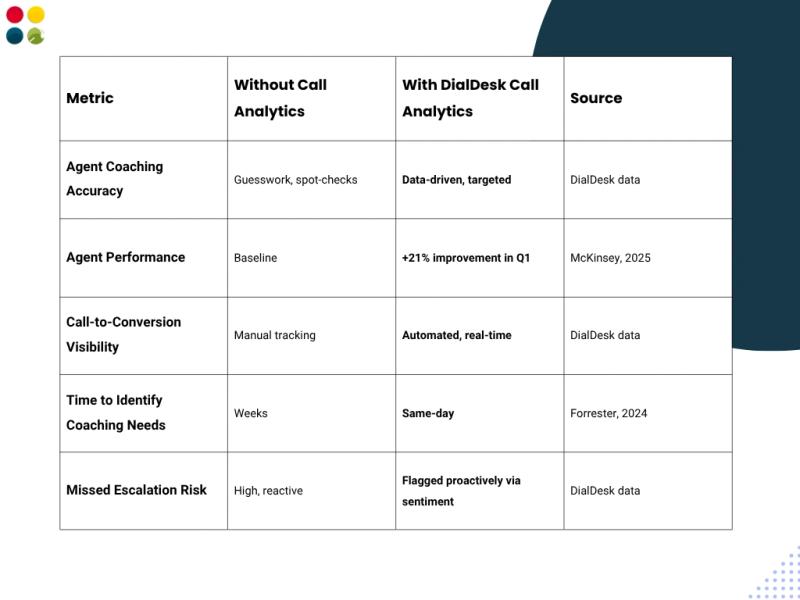
Contact centers that act on call analytics data see a 21% improvement in agent performance within the first quarter of adoption (McKinsey Contact Center Report, 2025).
What Makes Call Analytics in Cloud Telephony Different from Basic Call Logs
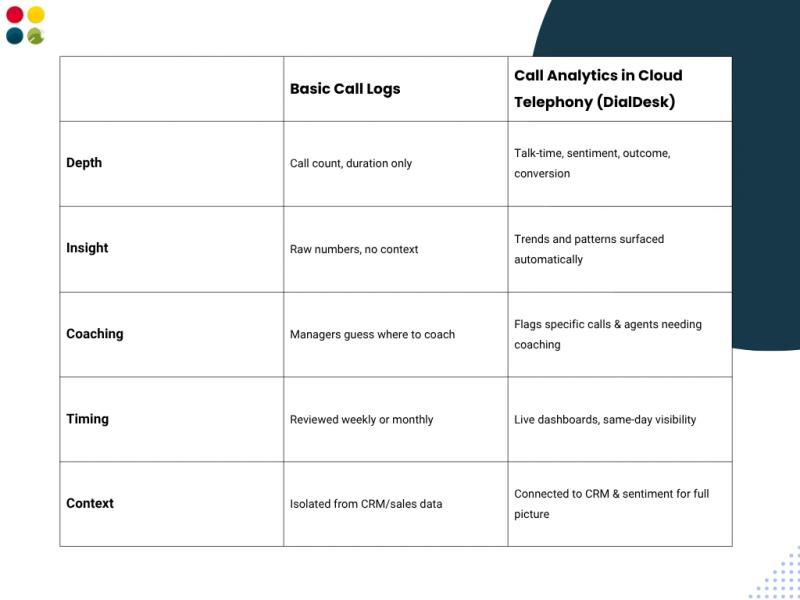
How Cloud Telephony Turns Raw Call Data Into Actionable Metrics
Cloud Telephony platforms don't just record calls — they structure the data so managers can see patterns across hundreds of calls at once.
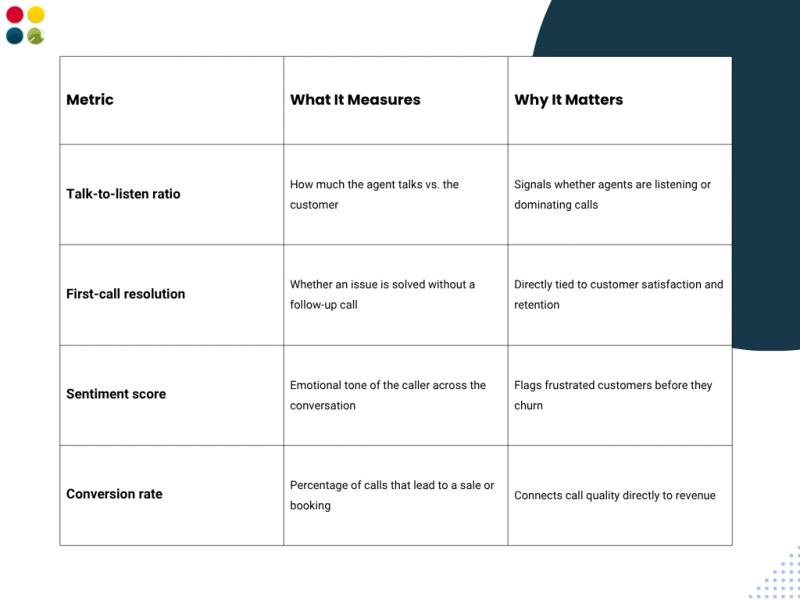
This is what separates Call Analytics from a call log: one is a record of what happened, the other tells you what to do next.
Business Impact: The Numbers Behind Call Analytics Adoption
Teams that adopt structured Call Analytics see measurable improvements in coaching efficiency and revenue outcomes (Forrester, 2024).
✅ Trusted by 500+ Contact Centers Across India
DialDesk's Call Analytics suite runs on a Cloud Telephony platform that is ISO 9001:2015 and ISO 27001:2013 certified — enterprise-grade infrastructure for data-driven teams. See our full call center software India platform.
Key Takeaways
● Counting calls answered tells you volume, not whether calls actually solved problems.
● Call Analytics connects call-level data, talk-time, sentiment, outcome, to real business results.
● Cloud Telephony captures this data automatically, without manual tagging or review.
● Metrics like first-call resolution and sentiment score predict retention better than raw call counts.
● DialDesk turns call data into same-day, actionable coaching insights.
Conclusion
Call Analytics is what turns a phone system from a communication tool into a performance management system, but only when it captures the metrics that actually predict outcomes.
Teams that still measure success by calls answered are flying blind on what those calls actually accomplished. The teams pulling ahead are the ones connecting call-level data to coaching, retention, and revenue.
Explore how DialDesk's Call Analytics connects with your AI Sentiment Analysis and CRM integration stack to give your team a complete, real-time performance picture.
You can't improve what you don't measure. DialDesk measures what actually matters.
📅 Want to See What Your Calls Are Really Telling You?
DialDesk's Call Analytics suite turns every call into structured, actionable data — talk-time, sentiment, and conversion, all in one dashboard. Join 500+ contact centers across India already coaching smarter with DialDesk.