What Are the Benefits of Cloud Telephony for Remote Teams?
Cloud Telephony lets remote teams make and receive calls from any device, anywhere, using one professional business number, without VPNs, office hardware, or physical phone lines. It gives managers of a Remote Call Center live visibility into calls, recordings, and performance, making Remote Work as accountable and connected as working from a shared office.
Why Remote Work Breaks Down Without the Right Calling Infrastructure
Remote Work solved where people work from, but for teams that rely on phone calls, sales, support, and collections, it created a new problem: how does a business phone number follow an employee who no longer sits at a desk?
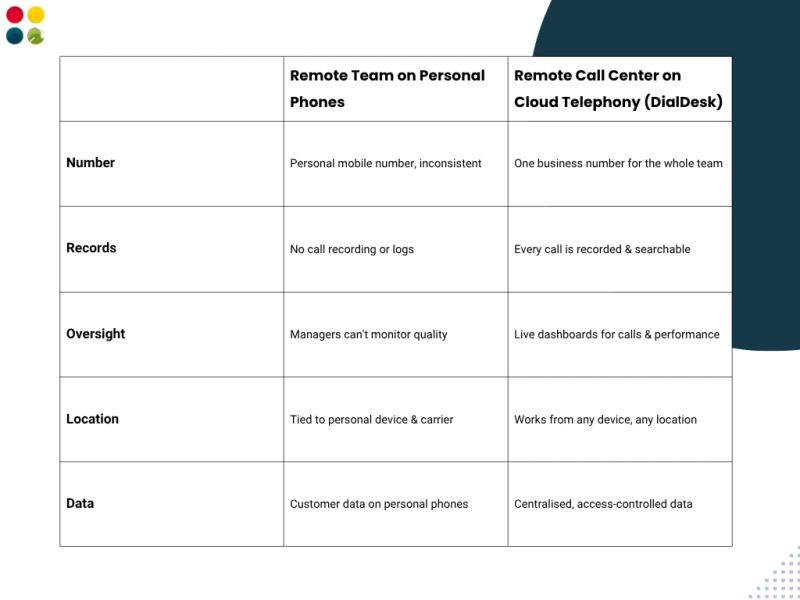
A Remote Call Center built on personal mobile phones or ad-hoc apps quickly becomes unmanageable. Calls aren't recorded, managers can't monitor quality, and customers reach different numbers depending on who happens to answer.
Cloud Telephony solves this by giving every remote employee a professional number tied to the business, not their device, with calls recorded, routed, and logged automatically no matter where the employee is working from.
💡 Why It Matters
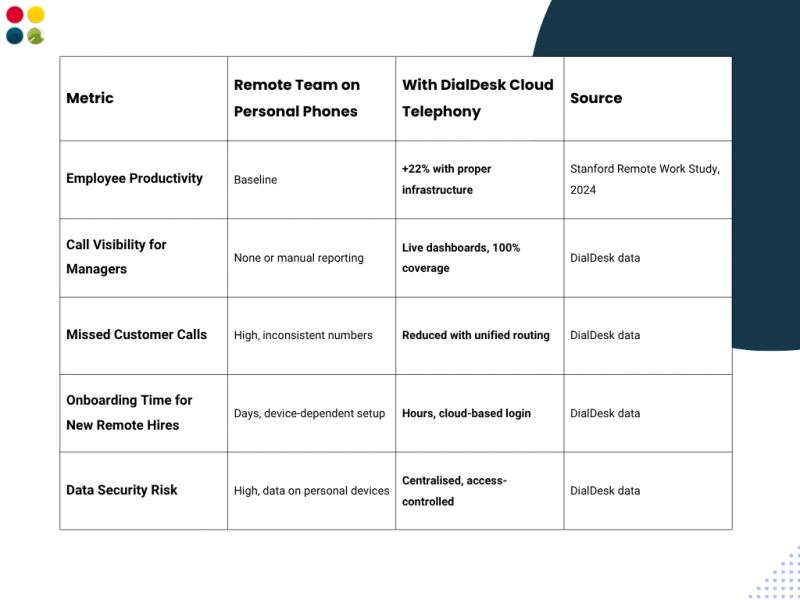
Companies with well-supported remote and hybrid teams report 22% higher employee productivity than those without proper remote infrastructure (Stanford Remote Work Study, 2024).
What Makes a Remote Call Center Work on Cloud Telephony
How Cloud Telephony Keeps Distributed Teams Connected and Accountable
Distributed team communication depends on more than a working phone line — it needs the same visibility and structure a manager would have in a physical office.
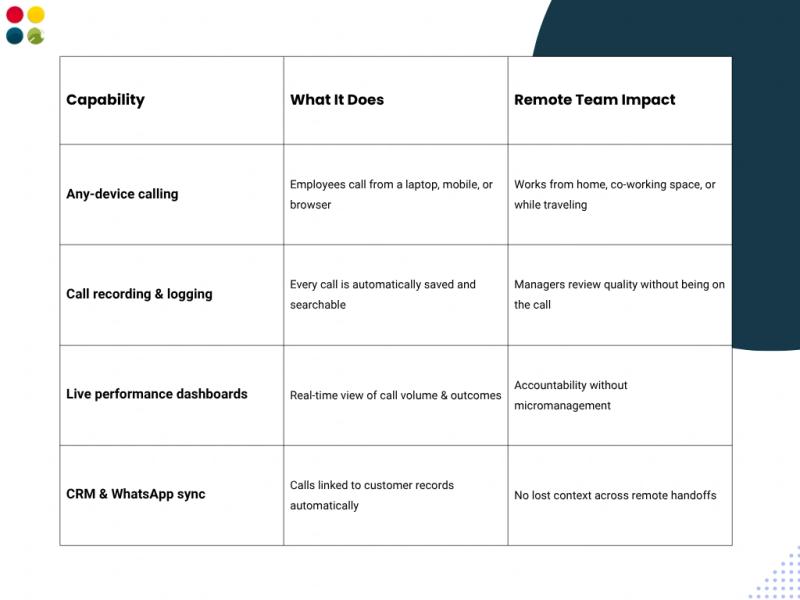
This is what makes Remote Work genuinely sustainable for phone-dependent teams — the infrastructure recreates office-level accountability without requiring anyone to be in an office.
Business Impact: The Numbers Behind Cloud Telephony for Remote Teams
Businesses running a Remote Call Center on Cloud Telephony see measurable gains in productivity and oversight (Stanford Remote Work Study, 2024).
✅ Trusted by 500+ Remote and Hybrid Teams Across India
DialDesk's Cloud Telephony platform is ISO 9001:2015 and ISO 27001:2013 certified, a secure, reliable infrastructure built for distributed teams. See our full call center software India platform.
Key Takeaways
● Remote Work creates a calling gap when business numbers stay tied to office desks instead of employees.
● A Remote Call Center on personal phones leaves managers with no recording, routing, or oversight.
● Cloud Telephony gives every remote employee one professional number that works from any device.
● Live dashboards recreate office-level accountability without requiring anyone to be physically present.
● DialDesk's ISO-certified platform keeps distributed team data centralized and secure.
Conclusion
Cloud Telephony is what makes Remote Work genuinely viable for phone-dependent teams, not just possible, but as accountable and connected as working from a shared office.
A Remote Call Center built on personal phones and ad-hoc tools will always leave gaps in oversight and customer experience. The teams that close those gaps with proper cloud infrastructure scale remote work without losing control.
Explore how DialDesk's Cloud Telephony platform connects with your CRM integration and WhatsApp and chat support stack to give your remote team one unified, accountable system.
Remote doesn't have to mean disconnected. DialDesk keeps distributed teams working like one.
📅 Want to Build a Fully Connected Remote Team?
DialDesk's Cloud Telephony platform gives every remote employee a professional number, recorded calls, and live performance dashboards, no VPN or hardware required. Join 500+ remote and hybrid teams across India already staying connected with DialDesk.