What Is IVR Implementation in a Call Center?
IVR Implementation in a Call Center is the process of deploying an Interactive Voice Response system that handles inbound caller interactions through automated menus before connecting to a live agent — or resolving the query entirely without one. Modern IVR Implementation moves beyond DTMF tone menu trees to NLP-powered conversational routing, where the caller states their need in natural language and the IVR detects intent, routes to the correct specialist queue, and in many cases resolves the query through AI-driven self-service. DialDesk delivers cloud-native IVR Implementation for Call Centers across India — with NLP intent detection, AI Sentiment Analysis integration, and 10–14 day activation.
Why IVR Implementation Is the Most Consequential Call Center Technology Decision?
IVR Implementation is the first experience a caller has when they contact a Call Center. It determines whether they reach the right agent first time, how long they wait, and whether their frustration compounds before a human ever picks up the phone. A well-implemented IVR is invisible — callers reach the right queue so fast they barely notice the system existed. A poorly implemented one generates abandoned calls, repeat contacts, and agent transfers that cost more than the IVR saved.
In 2025, the stakes of IVR Implementation have risen further. NLP-powered conversational IVR — where callers state their need rather than pressing digits — has become the standard expectation in India’s contact center market. Call Centers still running DTMF menu trees are generating caller friction that is measurable in their abandonment rates and first-call resolution scores.
💡 Why It Matters
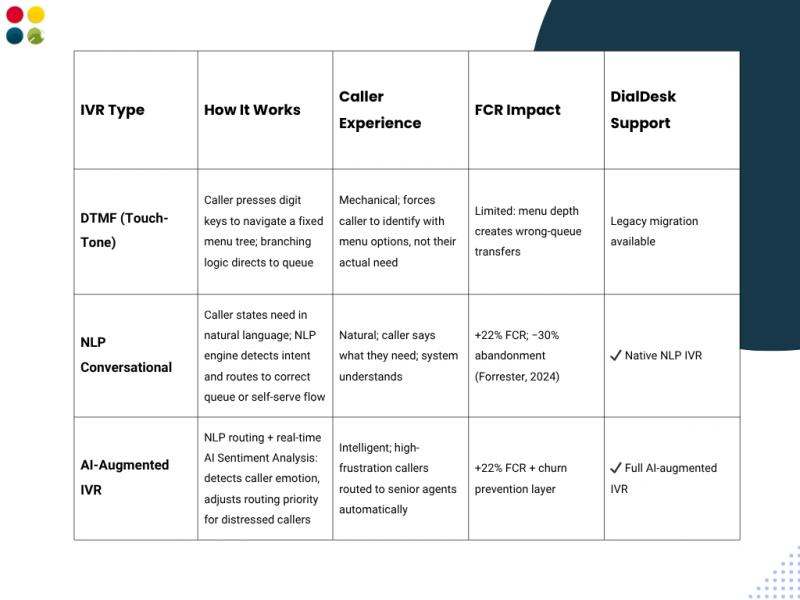
Forrester’s 2024 Contact Center Technology report found that Call Centers with correctly implemented NLP IVR achieve 22% higher first-call resolution and 30% lower call abandonment vs. those using legacy DTMF IVR. IVR Implementation quality is the single highest-impact routing variable in call center performance. (Forrester, 2024)
IVR Implementation Types: DTMF vs. NLP vs. AI-Augmented
Understanding IVR Implementation requires understanding the three generations of IVR technology — each with distinct capability, cost, and implementation complexity:
IVR Implementation: The 7-Step Deployment Process
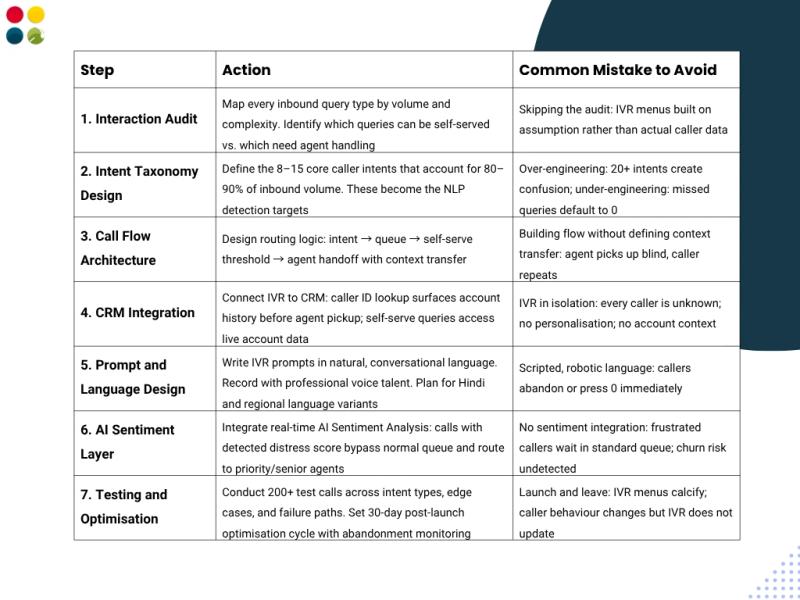
A successful IVR Implementation in a Call Center follows a structured seven-step process. Skipping or compressing any step is the primary cause of post-launch IVR failure:
IVR Implementation: The 5 Most Common Failure Points
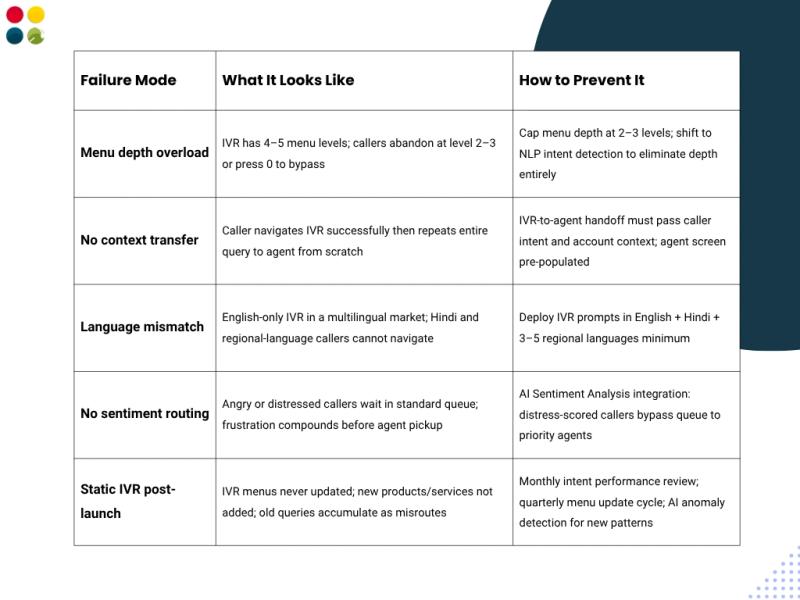
These are the five IVR Implementation failure modes that account for the majority of underperforming Call Center IVR systems in India:
✅ Trusted by 500+ Contact Centers Across India
DialDesk’s IVR Implementation platform is ISO 9001:2015 and ISO 27001:2013 certified — cloud-native NLP IVR with AI Sentiment Analysis integration, CRM-connected context transfer, multilingual prompt support, and 10–14 day deployment. Trusted by 500+ contact centers across India. See our full IVR and call routing platform.
Business Impact: What Correct IVR Implementation Delivers
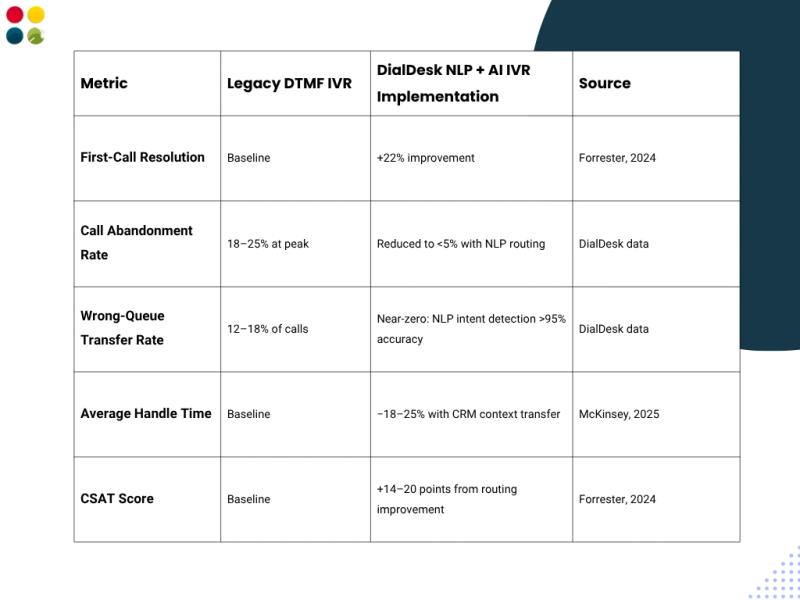
Call Centers that invest in correctly implemented NLP and AI-augmented IVR report consistent performance improvements from the first month of deployment (Forrester, 2024 / DialDesk data):
Key Takeaways
• IVR Implementation is the most consequential routing decision in a Call Center: NLP IVR delivers +22% first-call resolution and 30% lower abandonment vs. DTMF. (Forrester, 2024)
• Three IVR generations exist: DTMF (legacy), NLP conversational (current standard), and AI-augmented (NLP + real-time sentiment for churn-risk routing).
• Successful IVR Implementation follows 7 steps: interaction audit → intent taxonomy → call flow design → CRM integration → prompt design → AI sentiment layer → testing and optimisation.
• The 5 IVR failure modes: menu depth overload, no context transfer, language mismatch, no sentiment routing, and static post-launch IVR.
• DialDesk deploys cloud-native NLP + AI-augmented IVR in 10–14 days with CRM integration, multilingual support, and ISO certification from day one.
Conclusion
IVR Implementation is not a one-time setup — it is the routing architecture that determines the first experience of every caller who contacts your Call Center. Implemented correctly, it is invisible: callers reach the right agent with the right context so fast that the system enhances their experience without drawing attention to itself. Implemented incorrectly, it is the primary source of call abandonment, repeat contacts, and agent-side frustration.
The path from legacy DTMF to AI-augmented NLP IVR is a 10–14 day cloud deployment, not a multi-month infrastructure project. The performance improvement — +22% FCR, near-zero wrong-queue transfers, and churn-risk caller prioritisation — begins from the first day of operation.
Explore how DialDesk’s IVR Implementation integrates with your AI Sentiment Analysis, BPO call center services, and cloud telephony India stack to deliver intelligent call routing from day one.
IVR Implementation done right is invisible to the caller and transformative for the Call Center. DialDesk delivers both.
📅 Want to Deploy AI-Augmented IVR in Your Call Center?
DialDesk’s cloud-native IVR Implementation delivers NLP intent routing, AI Sentiment integration, CRM-connected context transfer, and multilingual prompts — activated in 10–14 days with ISO-certified security.
Join 500+ contact centers across India already delivering intelligent call routing with DialDesk.