Voice AI vs Chat AI: What's the Difference?
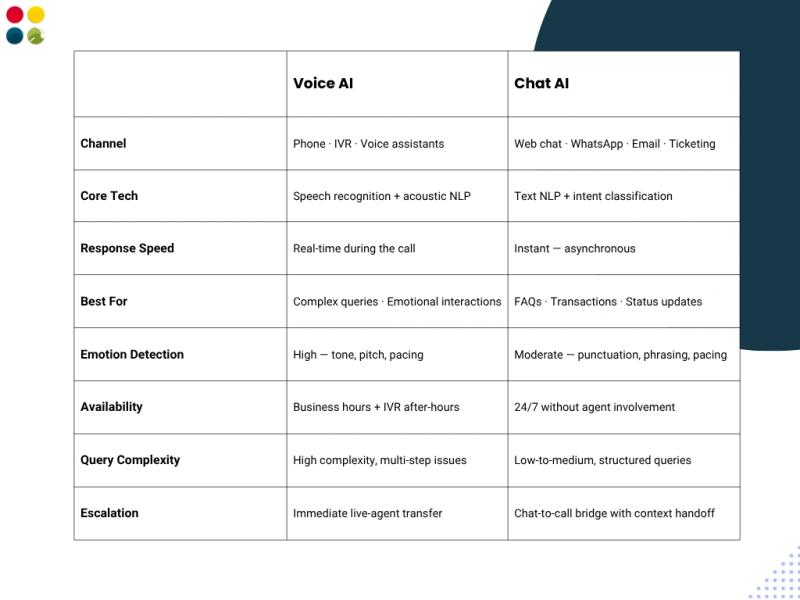
Voice AI handles spoken interactions using speech recognition, NLP, and real-time acoustic analysis. Chat AI handles text-based conversations using NLP, intent detection, and contextual understanding. The right choice depends on query complexity, channel preference, and emotional urgency, not technology trends. DialDesk deploys both, unified on one platform.
Why the Voice AI vs Chat AI Debate Matters for Your Business
Every contact center faces the same pressure: serve more customers, faster, at lower cost, without sacrificing experience quality. Voice AI and Chat AI are both powerful. But deploying the wrong one for the wrong use case wastes budget and frustrates customers.
The question is not which AI is better. The question is which AI fits the interaction. A customer filing a complaint in the midst of frustration needs Voice AI’s emotion detection. A customer checking an order status at midnight needs Chat AI's instant, asynchronous response.
Understanding Voice AI vs Chat AI starts with recognising what each one is actually built to do.
Voice AI vs Chat AI: Side-by-Side Comparison
When to Use Voice AI
Voice AI is the right channel when the interaction involves:
• High emotional stakes, frustrated, confused, or escalating customers.
• Complex, multi-step problems that require back-and-forth clarification.
• Elderly or low-digital-literacy users who default to the phone.
• Regulated industries, banking, insurance, and healthcare, require verbal consent or identity verification.
• Situations where tone and urgency signal the real need behind the stated request.
💡 Why It Matters
Acoustic AI detects frustration in voice within 5 seconds, long before a customer escalates verbally. Chat AI cannot replicate this signal at the same depth. For churn-risk interactions, Voice AI with real-time sentiment is not optional; it is the retention layer.
DialDesk's Voice AI integrates directly with IVR and call routing, so the right agent receives the right customer with the right emotional context already attached.
When to Use Chat AI
Chat AI is the right channel when:
• The query is simple, structured, and self-service-friendly, order status, account balance, appointment booking.
• The customer wants speed without human interaction.
• Volume is high, and agent availability is limited. Chat AI handles thousands of simultaneous threads.
• The channel is already text-based, WhatsApp, web chat, email, or ticketing platforms.
• After-hours support is needed without increasing headcount.
Chat AI is not a cheaper substitute for Voice AI. It is a purpose-built channel for interactions in which text-first resolution is faster, cleaner, and preferred by customers.
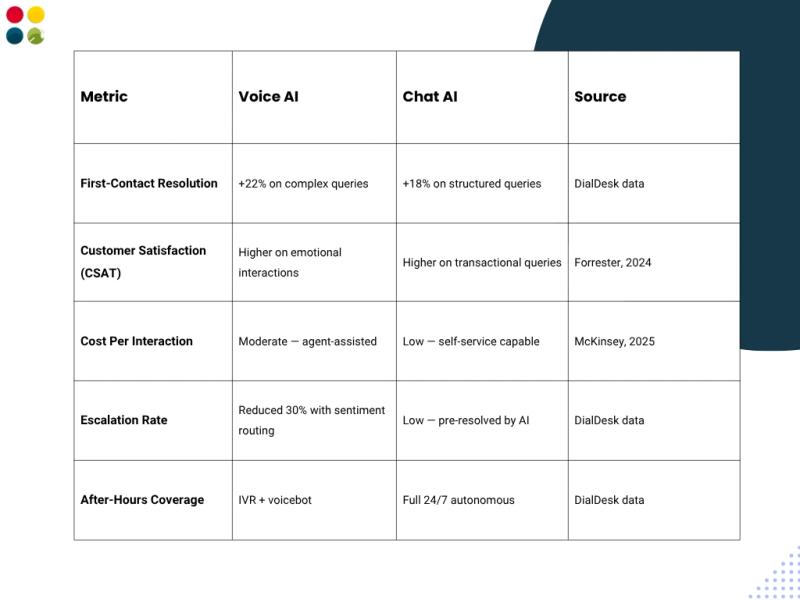
Business Impact: The Numbers Behind Each Channel
✅ Trusted by 500+ Contact Centers Across India
DialDesk's Voice AI and Chat AI platform is ISO 9001:2015 and ISO 27001:2013 certified, enterprise-grade AI built for India's contact center environment. See our full Call Center Software India platform.
Key Takeaways
- Voice AI is built for emotional, complex, and high‑stakes interactions, while Chat AI is built for speed, scale, and structured self‑service.
- Choose between Voice AI and Chat AI based on the type of query and the customer’s emotional state, not just channel preference.
- Deploying both on a unified platform, as DialDesk does, removes channel silos and enables seamless escalation with full context.
- Voice AI with real‑time sentiment analysis helps reduce churn risk during live calls, while Chat AI lowers the cost‑per‑interaction for routine queries.
- India’s contact center landscape requires both voice‑dominant inbound queues and high volumes of WhatsApp and chat interactions.
Conclusion
Voice AI and Chat AI are not rivals. They are complementary layers of a modern omnichannel customer experience stack. The question is never which AI is better, but which AI fits this interaction, this customer, and this moment.
Contact centers that deploy both intelligently routed and contextually connected outperform those that push every interaction through a single channel. DialDesk’s unified platform gives you both, with real-time AI sentiment analysis running across every touchpoint.
Explore how DialDesk’s Voice AI connects with your IVR, call routing, and cloud telephony stack in India and how its Chat AI integrates with WhatsApp and chat support to create a complete omnichannel AI layer.
The right channel at the right moment is not a feature. It is the difference between loyalty and churn.
Ready to Deploy Voice AI and Chat AI on One Platform?
DialDesk gives your contact center both Voice AI and Chat AI, unified on a single platform with real-time sentiment analysis and seamless escalation. Join 500+ contact centers across India already transforming CX with DialDesk.