OVERVIEW
This blog breaks down the most common customer service mistakes startups make—based on real data, industry patterns, and years of operational insights at DialDesk.
You’ll find:
● The mindset gaps founders rarely talk about
● Where startups unintentionally leak revenue
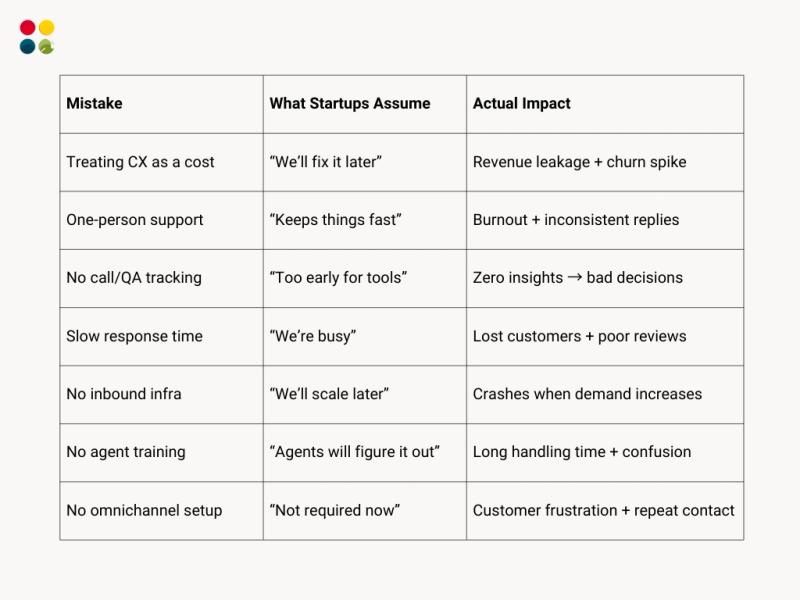
● A laser-focused table (infographic)
● Key takeaways, FAQs, and a wrap-up
● GEO-structured, AEO-optimized format for Google + AI search ranking
Introduction
Startups today scale faster than ever — but customer expectations scale even faster.
Across India’s startup ecosystem, from fintech to D2C to SaaS, one pattern is consistent: teams invest heavily in acquisition, but treat customer service like a “later problem.”
But here’s the twist…
Customer Service isn’t a post-growth function anymore. It creates growth.
In a market where 74% of consumers switch brands after just two poor experiences (PwC, 2024), customer service is no longer a support unit — it’s a retention engine, an insight machine, and often the fastest way to build trust when you don’t yet have brand equity.
Yet, most startups (even funded ones) fall into the same avoidable traps.
Not because they don’t care — but because early-stage chaos creates blind spots.
This blog uncovers the top customer service mistakes startups make, why these mistakes cost more than they appear on the surface, and what high-growth companies do differently.
If you’re building a startup in 2025, this is your blueprint for avoiding expensive CX failures early.
Top Mistakes Startups Make in Customer Service (with Startup & Industry Focus)
1. Treating Customer Service as a Cost — Not a Growth Lever
Most startups still see support as:
“Expense After Sales.”
But here’s what the data shows:
● 89% of customers are more likely to repurchase after a positive service experience (Salesforce, 2024)
● Support-driven insights reduce churn by 23–34% in subscription businesses
● Startups with strong early CX see 2.4x higher LTV within the first 18 months
Founders often delay building support processes until escalations explode.
By then, damage is already done.
2. Relying Entirely on One Person — “The Everything Agent”
Every startup has that one hero employee handling:
● Calls
● WhatsApp messages
● Emails
● Complaints
● Refunds
● And sometimes… social comments
This model is fast in the beginning but completely unsustainable as inquiries grow.
The risk?
● Burnout
● Inconsistent responses
● Missed leads
● Zero documentation
Eventually, you lose customers not because your product is bad — but because your processes can’t keep up.
3. No Call Recording, QA, or Insight Tracking
Customer conversations are a goldmine of:
● Feature requests
● Market trends
● Product gaps
● Competitor signals
● Retention cues
But most Indian Startups don’t track or audit any of it.
Without insights, you end up building features based on assumptions — not customer truth.
High-performing startups treat support calls like research interviews.
4. Slow Response Time = Lost Revenue
Speed is currency.
A study by HubSpot found:
● 90% of customers rate “fast resolution” as their #1 support expectation
● Delayed replies increase churn probability by 40–60%
Indian startups especially struggle with:
● Peak-hour call spikes
● Delayed email replies
● Inconsistent WhatsApp responses
Speed builds trust. Slow responses kill conversions.
5. Not Setting Up Scalable Inbound Infrastructure Early
Startups often begin with:
● A single phone number
● Two shared email inboxes
● WhatsApp running on an intern’s phone
Then one day, they go viral.
Volume explodes. Systems collapse. Reputation tanks.
Scalable Inbound Support Outsourcing isn’t expensive anymore — but not having it is.
6. Zero Training for Agents
Startups train product teams for months…
But train customer-facing agents for one day.
Results?
● Wrong information given
● Inconsistent tone
● Frustrated customers
● Extended call handling time
● No empathy structure
Proper training improves FCR (first-call resolution) by 28% and reduces call load by 32%.
7. Underestimating the Power of Omnichannel
Today’s customers switch between:
● Call
● Website chat
● X (Twitter)
Startups that treat channels separately often miss:
● Complaint history
● Context
● Repeated issues
● Lead information
Customers hate repeating themselves.
Omnichannel setup solves that.
Top Startup CX Mistakes & Their Impact
Thoughts to Ponder
● What if your next 100 customers came from better support, not better ads?
● What if your product roadmap became sharper because your support calls told you exactly what to build?
● What if support became your brand differentiator — not your cost center?
Key Takeaways
● Startups lose more customers to poor service than poor products
● Customer Experience is a growth lever, not an afterthought
● Data-backed support systems prevent reputation damage
● Training, infrastructure, and speed decide your retention curve
● The earlier you fix CX — the cheaper it is
Conclusion
Scaling a startup means balancing speed with structure.
Ignoring customer service may feel harmless in the early days, but the long-term impact is real — lost revenue, damaged brand equity, and preventable churn.
The startups that win in 2025 aren’t the ones with the loudest marketing…
They’re the ones with the most reliable customer experiences.
If you want your customers to trust you, return to you, and recommend you — CX must be built into the foundation, not added later.
Explore practical strategies to strengthen team performance as you tips to manage your hybrid customer service team, ensuring right communication, higher productivity, and consistently delightful customer experiences.
Wrap Up
Startups don’t fail because they lack growth.
They fail because they can’t handle the growth when it comes.
Customer service is how you make growth sustainable.
Want to fix these gaps before they cost you revenue?
Book a free CX audit with DialDesk — and get a clear, data-backed roadmap for improving your customer service.