OVERVIEW
● Live chat is a support feature, but it’s also a psychological encounter that determines what customers feel about a business. This post uncovers how agents’ communication style—warm tones, empathy, personalization, and active listening—turns boring chats into moments of trust and loyalty.
● Based on facts and figures, it demonstrates why customer emotions are important and delivers actionable strategies to make live chat approachable, human, and truly memorable.
Introduction
Today’s customers don’t merely want answers—they want to connect. And in the online environment, live chat is frequently the first (and sometimes sole) touchpoint they’ll have with your brand.
Here’s the shocking reality: 63% of consumers are more likely to visit a website with live chat support (Emarketer). But it isn’t the availability of chat that fosters loyalty—it’s how the interaction feels.
A warm Live Chat Software can make a frustrated customer a loyal champion. A cold, automated one can make them flee to competitors in seconds. The psychology of how agents chat—word selection, tone, and empathy—is the magic ingredient.
Why Psychology Matters in Live Chat & Help Desk?
● 70% of buying experiences are centered around how customers feel (McKinsey).
● 79% of customers prefer live chat over email/phone because it feels more instant and personal (Zendesk).
● Customers who feel “heard” are 3x more likely to recommend a brand (Qualtrics).
Psychological Tactics to Make Live Chat Friendly
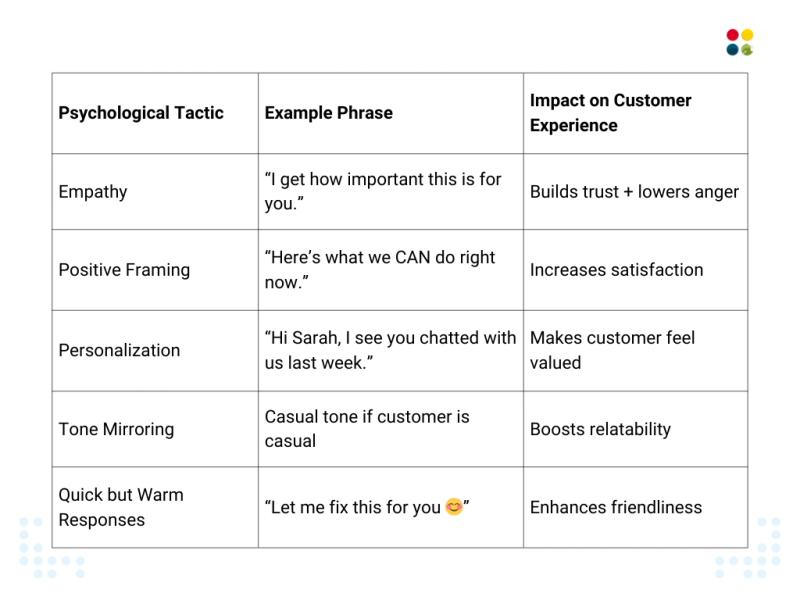
1. Mirror the Customer’s Tone
● If the customer is formal, keep it professional. If casual, adapt accordingly. ● Builds instant reliability.
2. Use Empathy-Driven Phrases
Instead of: “We’ll look into it.” Say: “I understand how frustrating this must be—let me fix it for you.”
3. Personalize with Names & Context
● Address customers by name.
● Look up previous conversations for continuity.
4. Balance Speed with Friendliness
● Talk to customers by name.
● Refer back to past conversations for continuity.
5. Positive Language Psychology
● Use “what we can do” instead of “can’t”.
● Put issues in terms of opportunities.
Learn how AI helps agent scheduling by optimizing shifts, predicting demand, and improving workforce efficiency in real time.
Psychology Tactics vs. Impact on Customer Experience
Expert-Level Insight
● Harvard Business Review points out that emotional connection is a more powerful driver of customer value than satisfaction in isolation.
● Live Chat, the way it should be implemented can boost conversion rates up to 40%.
Thoughts to Ponder
● Is your live chat purely transactional, or is it conversational?
● Are your agents empowered with empathy—or scripts?
● Do you track the emotional value of live chat, not the resolution times?
Wrap Up
The psychology of Live Chat Customer Support is more than quick responses—it’s building human moments in virtual environments. When customers are heard, valued, and understood, they’re more likely to be loyal.
Key Takeaways
● Live chat = friendly = increased loyalty, retention, and conversions.
● Psychology (tone, empathy, personalization) is just as important as technology.
● Training agents in psychology is just as important as training them in tools.
Conclusion
Your live chat is your brand’s friendliest face—or its coldest barrier. By using the principles of psychology, you turn chats into conversations that foster trust and loyalty.
With DialDesk’s Live Chat & Help Desk Solutions, you don’t just answer—you bond. Make every chat personal, friendly, and memorable.
Turn every conversation into a connection — Start with DialDesk Live Chat today!