OVERVIEW
● India’s rural market is no longer the ‘untouched’ segment—it’s a goldmine waiting to be leveraged. FMCG businesses are increasingly shifting focus to tier 2, 3, and 4 cities to drive growth.
● In this blog, we’ll explore how FMCG companies plan to expand in rural India, the strategies they employ, and the potential challenges and opportunities in this sector.
Introduction
Rural India holds almost 65% of the nation’s population, yet for years, FMCG companies concentrated almost entirely on urban markets. Now, this is rapidly shifting. With increasing incomes, better connectivity, and changing consumer habits, rural markets have become the next big thing for growth. FMCG players are not just pushing products anymore—they are localizing, innovating, and formulating rural-focused strategies to win the hearts of this vast audience.
The challenge? Rural markets are scattered, diverse, and price-sensitive. But the opportunity lies here. By responding to local needs, harnessing technology, and establishing robust distribution networks, Indian FMCG Companies are developing strategies that not only generate sales but also build brand loyalty in segments that were earlier not served.
Key Strategies FMCG Businesses are Using to Grow in Rural India
1. Localized Product Innovation
● Smaller Packs: Sachets and mini-packs make products affordable and minimize risk for rural consumers.
● Flavor & Preference Customization: Products suit regional tastes and preferences.
● Affordable Pricing: Rural consumers focus on value, and therefore, pricing strategies are also modified accordingly.
Example: HUL’s “Small Sachet” strategy boosted penetration in villages by 25% in 2023. (Source)
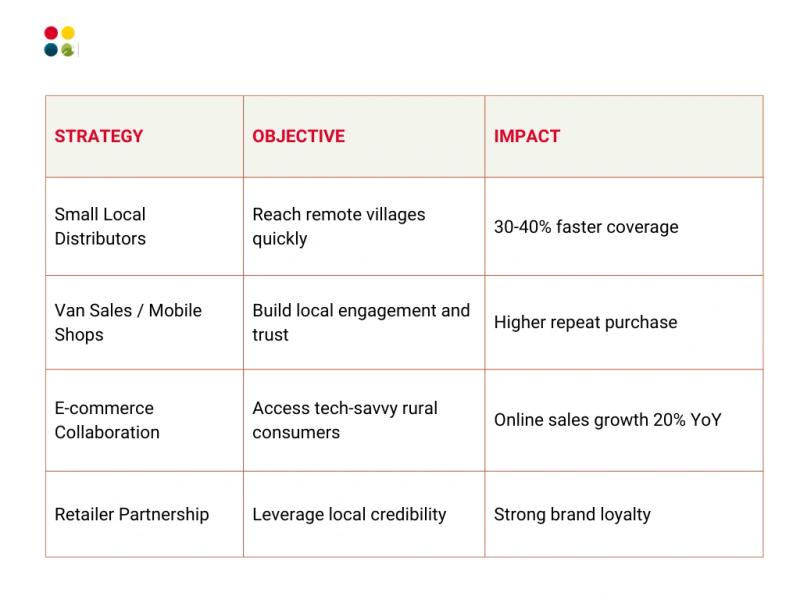
2. Robust Distribution Networks
● Direct-to-Village Approach: Companies employ local distributors and van sales models.
● E-commerce Tie-Ups: Platforms like Amazon and Flipkart have dedicated rural supply chains.
● Partnerships with Local Retailers: Impacts trust and assures product availability.
3. Technology Integration
● Mobile Marketing & SMS Campaigns: Educate consumers about products.
● AI & Data Analytics: Understand purchase patterns and predict demand.
● Digital Payment Adoption: Enables cashless payments in rural locations.
Example: ITC’s e-Choupal program enabled rural customers and enhanced product visibility immensely.
4. Consumer Awareness & Education
● Product Demonstrations: Live demonstrations at local markets drive adoption.
● Workshops & Community Engagements: Educate on hygiene, nutrition, and brand value.
● Influencer Marketing at Micro Level: Local influencers or farmers become brand ambassadors.
5. Sustainability & Rural Inclusion
● Environment-Friendly Packaging: Critical for agriculture-dependent rural communities.
● Supporting Local Economy: Local recruitment, sourcing locally, and community well-being.
● Brand Storytelling: Connecting products with rural development stories instills trust.
Rural FMCG Distribution Strategy
Statistics That Matter
● Rural India accounts for ~45% of FMCG sales in India. (Source: IBEF 2024)
● Mobile penetration in rural India is 78%, and digital outreach becomes feasible.
● Tier 3 and 4 cities recorded 18% FMCG Business growth in 2023, outgrowing urban growth. (Source: NielsenIQ 2024)
Challenges FMCG Businesses Face in Rural India
● Infrastructure Limitations: Thin road networks affect logistics.
● Price Elasticity: Low margins result in even small changes in price impacting demand.
● Cultural Heterogeneity: One-size-fits-all solutions do not work in diverse areas.
● Low Awareness of Brands: Rural consumers might stick to local substitutes.
Thoughts to Ponder
● Is it possible for FMCG Business in India players to maintain urban-type margins in rural markets?
● How can technology fill gaps in distribution and consumer insight?
● Is rural marketing the future of all FMCG growth plans in India, or only an additional channel?
Key Takeaways
● Rural India has huge untapped opportunities for FMCG companies.
● Innovation is based on a mix of local products, robust distribution, technology adoption, and consumer education.
● Sustainable and inclusive plans develop long-term loyalty and community trust.
Conclusion
FMCG Industry in India is no longer urban-focused—today, it is rural-ready. Through the power of innovative thinking, adopting technology, and community engagement, these organizations are unleashing huge growth opportunities. Rural India is not merely a market—it’s a growth partner, with life lessons to teach in adaptability, patience, and innovation.
If you wish to streamline your FMCG operations, enhance rural reach, or grow your business profitably, DialDesk can assist you in crafting smarter, data-driven, and AI-enabled strategies to reach the right people, every time.