OVERVIEW
India’s FMCG industry is a force of nature—fast-paced, price-sensitive, and fiercely competitive. Whether you’re a startup disrupting with D2C models or an established legacy brand fighting for shelf space, one thing remains true: Customer service isn’t a department anymore—it’s the product experience.
In this blog, we’ll unpack:
● Why customer service is mission-critical for Indian FMCG brands.
● What a modern, scalable service playbook looks like.
● Data-backed practices to boost satisfaction & retention.
● AI-ready frameworks that cut costs but deepen customer loyalty.
● Actionable takeaways tailored for India’s unique retail + digital hybrid ecosystem.
Introduction: From Retail Chaos to CX Clarity
The Indian FMCG Companies don’t operate on strategy decks but on Kirana stores, hyperlocal delivery, WhatsApp complaints, product swapping through DMs, and the forbearance of agents handling 300 queries a day.
While startups pursue GTM velocity and large brands pursue margins, what tends to slip through the cracks is consistency in customer support. But here’s the change:
Today, customer experience is not an appendage of the sale—it’s a value proposition unto itself.
● An unhappy buyer on Blinkit will likely gripe on Twitter in real time.
● A confused Kirana retailer may leave your brand for a competitor with clearer communication.
● A ghosted post-purchase D2C shopper will rarely reorder, regardless of the quality of the product.
The question is no longer “Should we invest in customer service?” but rather:
“How do we create a cost-effective, AI-powered, customer-first service system that supports our growth?”
Let’s break it down!
The Building Blocks of a Customer Service Playbook
Here’s a systematic approach for startups and enterprise FMCG businesses alike to scale customer service successfully in India.
1. Identify the Right Support Channels
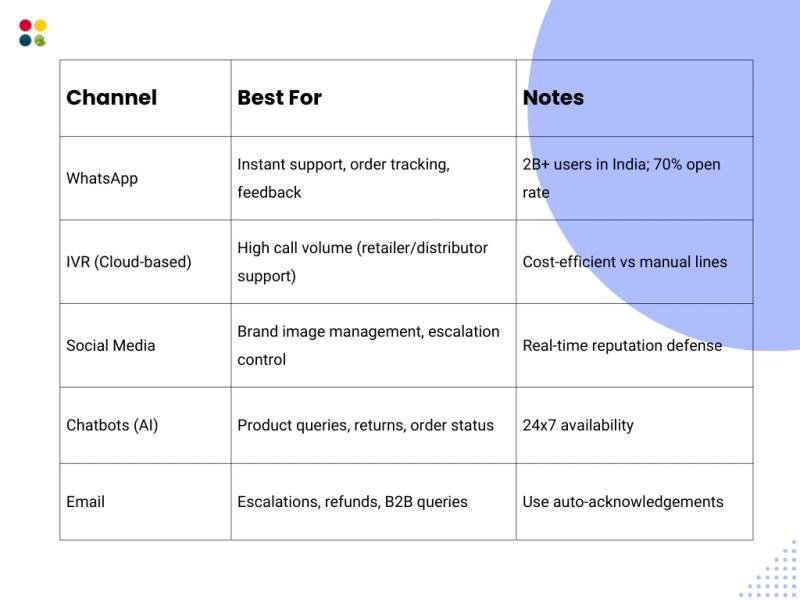
Expert Tip: WhatsApp API is the most untapped CX goldmine in India. It brings personalization and automation.
2. Set Measurable KPIs (Customer-Centric, Not Call-Centric)
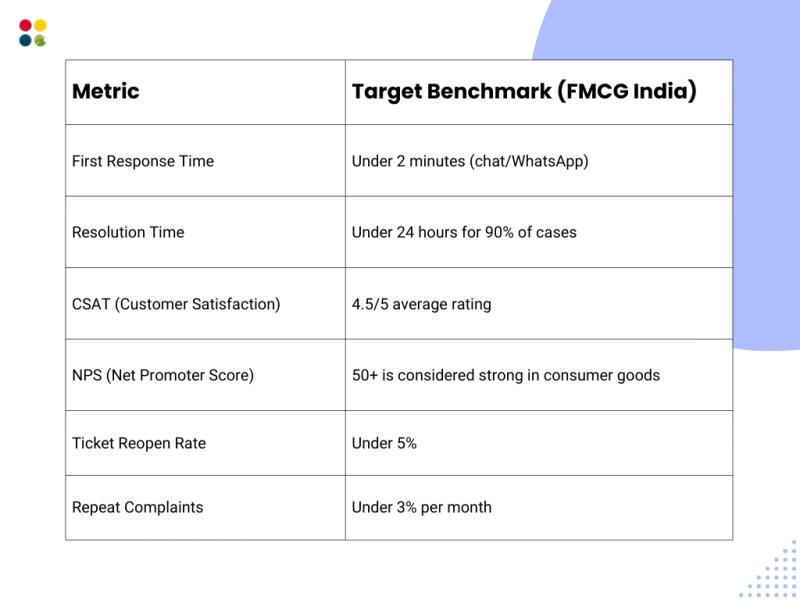
Startup Focus: Monitor these from Day 1. The sooner you have CX data, the stronger your investor pitch.
3. Build a Resolution-Focused Agent Playbook
Instead of robotic replies, equip your team with scenario-specific response templates and escalation workflows.
Example Template: Product Complaint on WhatsApp
Customer:
“The shampoo I received smells weird. Can I return it?”
Agent Response Template:
“Hi [Name], sorry to hear that! Please send us a quick photo and batch number. We’ll process a refund or replacement within 24 hours—your satisfaction matters to us.”
Escalation Path:
● Tier 1 Agent → QA Team → Logistics Partner → Tier 2 Support (if needed)
4. Leverage AI for Support Tagging & Routing
Manual ticket classification leads to:
● Slow TAT
● Poor tracking
● Burned-out agents
Instead, use AI-based auto-tagging and sentiment detection tools like:
● DialDesk (Built for Indian brands)
● Freshdesk AI Assist
● Zendesk Auto-Tag
This ensures:
● Faster routing to the right teams
● Priority escalation based on tone
● Smart insights into trending complaints (eg, a batch issue)
5. Enable Retailer-Focused Support
For FMCG, retailers and distributors are customers too. Your Customer Service Support playbook should include:
● Dedicated WhatsApp or IVR lines
● Distributor dashboard with ticket tracking
● Field sales CRM integration
Stat Alert: Over 60% of returns or brand switches in General Trade stem from poor after-sales service or inventory response times. (Source: Nielsen India FMCG Retail Study, 2024)
6. Automate Feedback Collection & Loyalty Follow-Ups
Your CRM must trigger:
● Feedback requests 48 hours after delivery
● Loyalty offers based on past purchase frequency
● Cross-sell prompts (e.g., “Try this with what you bought!”)
AI Tip: Use sentiment analysis on feedback to auto-trigger escalation (e.g., low ratings get a follow-up call).
Thoughts to Ponder
● Why do startups become so fixated on CAC but not the cost of bad retention?
● Is your customer support team a cost center or a top-line contributor?
● Are you scripting your agents out—or equipping them with context and empathy?
Stats That Speak
● 68% of Indian FMCG consumers report responsive service impacting repurchase decisions. (KPMG, 2023)
● 71% of Indian WhatsApp support requests are solved without human escalation when bots are well-integrated. (DialDesk Internal Benchmark, 2024)
● 84% of Gen Z customers want to see brands publicly respond to complaints on social media. (Deloitte Digital CX Survey, 2024)
Key Takeaways
● Online Customer Service Support is your brand reputation engine—not a backend function.
● Automate the mundane, but humanize the key.
● Align your startup’s CX playbook to India’s digital + physical retail complexity.
● Measure what matters—resolution quality trumps ticket volume.
● Build for feedback loops—not merely feedback collection.
Wrap Up: Your Next CX Move Starts Here
The FMCG Industry in India market will never take a breather. But your customer service can keep up—if you plan for it like you plan your supply chain, ad spend, or product roadmap.
It’s time to transition from firefighting to future-proofing.
Ready to Build Your Own Customer Service Engine?
DialDesk helps Indian FMCG brands deliver 24×7 scalable customer experiences with:
● Shared agent models
● AI-based ticket tagging
● WhatsApp-first customer service
● Retailer and distributor support flows
● Real-time sentiment alerts and escalation paths
Book your free FMCG CX audit with DialDesk today!
“DialDesk is to CX what AC is to comfort—Always Working, Never a Burden.”