OVERVIEW
Across India’s rapidly growing e-commerce market, businesses are seeing thousands of potential customers drop off between the cart and checkout stages. Understanding the difference between cart abandonment and checkout abandonment can help brands recover lost revenue and improve conversion rates.
Introduction
Every online business celebrates when a customer adds a product to their cart. It feels like the sale is almost complete. But in reality, the journey from cart to payment is where many businesses lose their customers.
Two of the biggest challenges eCommerce companies face today are cart abandonment and checkout abandonment. While they sound similar, they represent different stages of the buyer’s journey—and each one reveals unique insights into customer behavior.
If businesses understand where and why customers drop off, they can turn missed opportunities into completed sales.
What is Cart Abandonment?
Cart Abandonment occurs when a visitor adds items to their shopping cart but leaves the website before beginning the checkout process.
This stage reflects purchase hesitation, where customers show interest but are not yet fully convinced to buy.
Common Reasons for Cart Abandonment
● Unexpected costs
High shipping fees or hidden taxes often appear only after products are added to the cart.
● Price comparison behavior
Many customers use carts as bookmarks while they compare prices across multiple websites.
● Lack of trust signals
If customers do not see secure payment badges, clear policies, or reliable brand credibility, they may abandon the cart.
● Distractions or time constraints
Sometimes the user simply leaves the website, intending to return later—but never does.
● Account creation requirements
Forcing users to create an account before checkout often increases cart abandonment.
What is Checkout Abandonment?
Checkout Abandonment happens after the customer begins the checkout process but leaves before completing the purchase.
At this stage, the buyer has strong purchase intent, which means losing them here is even more costly for businesses.
Major Causes of Checkout Abandonment
● Complicated checkout forms
Long forms asking for unnecessary details can frustrate customers.
● Limited payment options
Customers expect multiple payment choices such as UPI, cards, wallets, and net banking.
● Slow website speed
Delays during payment processing often cause users to abandon the purchase.
● Security concerns
If payment pages do not look secure or trustworthy, customers hesitate.
● Technical glitches
Errors, failed payments, or poor mobile optimization can instantly stop a transaction.
Cart vs Checkout Abandonment: Key Differences
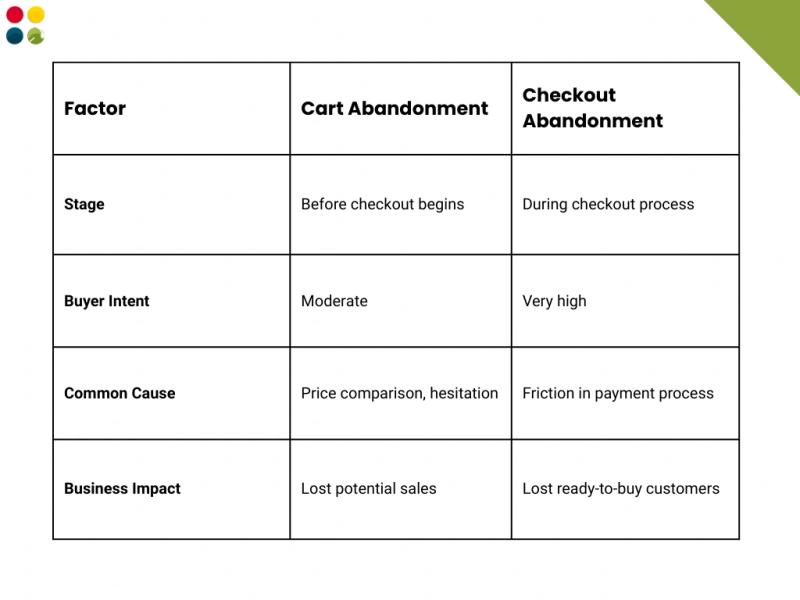
Understanding this difference allows businesses to create targeted strategies for each stage of the buyer journey.
Strategies to Reduce Cart Abandonment
1. Show Transparent Pricing
Always display shipping costs, taxes, and delivery charges early in the buying process.
2. Use Exit-Intent Offers
Discounts or limited-time deals can encourage customers to complete the purchase.
3. Enable Guest Checkout
Removing account creation barriers makes the process faster.
4. Send Cart Recovery Notifications
Email, SMS, or WhatsApp reminders can bring customers back to complete their purchase.
5. Build Trust
Include secure payment badges, clear return policies, and customer reviews.
Strategies to Reduce Checkout Abandonment
1. Simplify the Checkout Process
Reduce the number of steps and fields required.
2. Offer Multiple Payment Methods
Provide UPI, debit/credit cards, wallets, and COD options.
3. Optimize for Mobile Users
A large percentage of shoppers buy through mobile devices.
4. Improve Page Speed
Fast-loading payment pages prevent frustration.
5. Provide Real-Time Customer Support
Live Chat or instant call assistance during checkout can resolve last-minute doubts.
Final Thoughts
Cart abandonment and checkout abandonment may seem like small drop-off points, but together they create a silent battle that significantly affects online sales. By understanding customer behavior and removing friction at each stage, businesses can transform abandoned sessions into successful transactions.
In today’s competitive eCommerce environment, even small improvements in the checkout experience can lead to substantial revenue growth.
Ready to turn abandoned carts into revenue?
Connect with our top experts now and explore how our advanced solutions can help you reduce abandonment rates and maximize conversions.