What Does a Typical Contact Center Workflow Look Like?
A typical Contact Center workflow moves through five stages: call intake (the customer contacts the business), routing (the call is directed via IVR to the right agent or team), interaction (the agent resolves the query using CRM and knowledge tools), logging (the outcome is recorded and logged automatically), and follow-up (any unresolved issue is escalated or scheduled for callback). Contact Center as a Service platforms like DialDesk automate most of this workflow, reducing manual handoffs between stages.
Why Mapping the Contact Center Workflow Matters Before Choosing Software
Many businesses select Contact Center Solutions based on a feature list without first mapping their own workflow, the actual sequence of steps a customer interaction goes through from first contact to resolution.
Without this mapping, it's easy to buy a Contact Center platform that handles call intake well but leaves gaps at the follow-up stage, or vice versa, creating the same disconnected experience the new software was meant to fix.
Understanding the full workflow first makes it possible to evaluate Contact Center as a Service platform against the actual stages that matter, not just a generic feature checklist.
💡 Why It Matters
Contact centers that map and optimize their full workflow before selecting software report 24% fewer dropped handoffs between call stages (Contact Center Operations Report, 2025).
The 5-Stage Contact Center Workflow: Manual vs Automated
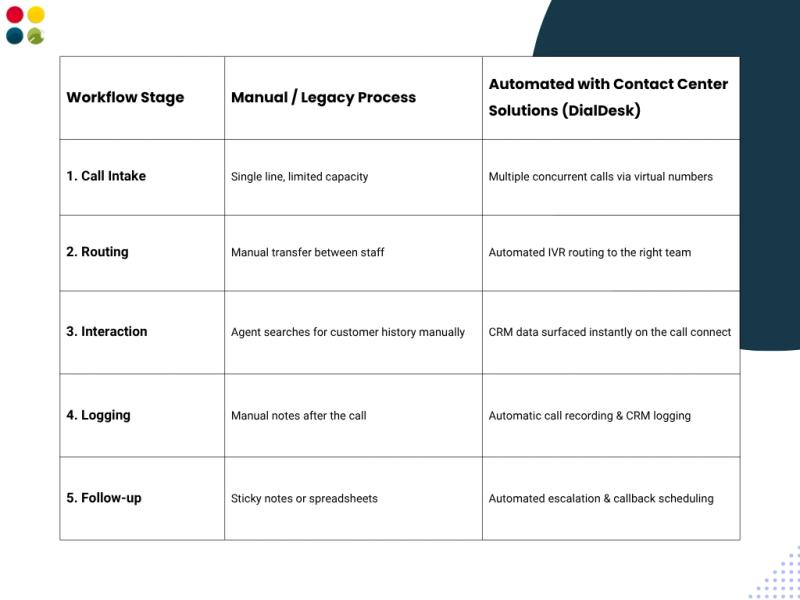
How Contact Center as a Service Automates Each Workflow Stage
Call handling workflow automation isn't about replacing agents — it's about removing the manual handoffs where information and context get lost between stages.
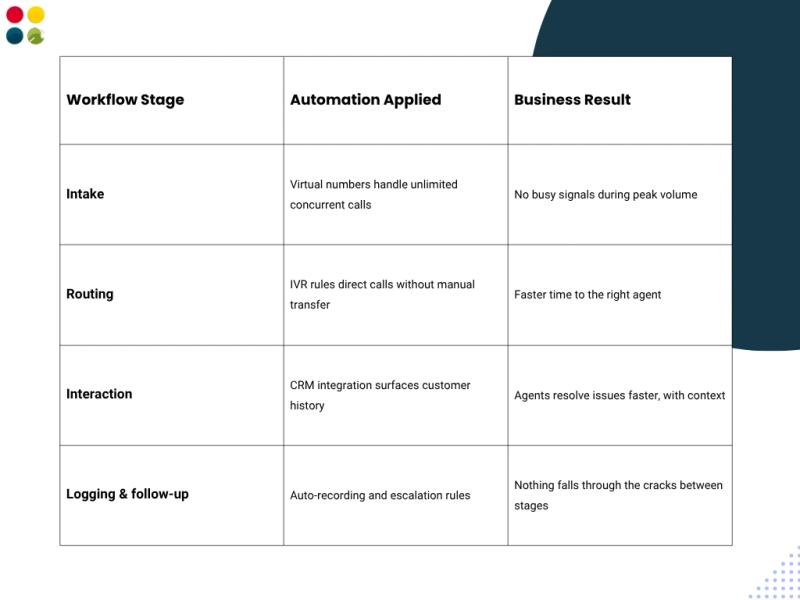
This is what separates a Contact Center running on modern software from one relying on manual handoffs: automation closes the gaps between stages where customer experience typically breaks down.
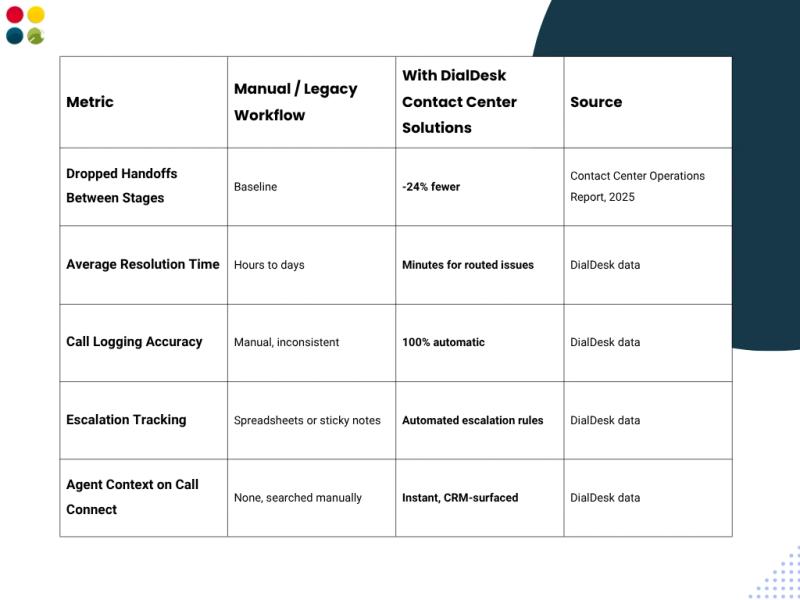
Business Impact: The Numbers Behind an Optimised Contact Center Workflow
Contact Center Solutions that automate their full workflow see measurable improvements in consistency and resolution speed (Contact Center Operations Report, 2025).
✅ Trusted by 500+ Contact Centers Across India
DialDesk's Contact Center platform is ISO 9001:2015 and ISO 27001:2013 certified — automating every workflow stage on secure, reliable infrastructure. See our full call center software India platform.
Key Takeaways
● A typical Contact Center workflow has five stages: intake, routing, interaction, logging, and follow-up.
● Selecting software without first mapping this workflow risks buying a platform with gaps at critical stages.
● Contact Center Solutions automate handoffs between stages, where customer experience typically breaks down.
● Contact Center as a Service platforms surface CRM data instantly, reducing agent search time during interactions.
● DialDesk automates all five workflow stages on one ISO-certified platform.
Conclusion
A Contact Center workflow is only as strong as its weakest handoff; a fast intake process means little if routing is manual, and accurate routing means little if follow-up gets lost in a spreadsheet.
Businesses that map their full workflow before selecting Contact Center Solutions make better software decisions because they're evaluating against the actual stages where their customer experience currently breaks down.
Explore how DialDesk's Contact Center platform automates every stage of your workflow with CRM integration and Call Analytics built in.
A workflow is only as strong as its weakest handoff. DialDesk automates everything.
📅 Want to Automate Your Contact Center Workflow?
DialDesk's Contact Center platform automates intake, routing, interaction, logging, and follow-up in one system. Join 500+ contact centers across India already running smoother workflows with DialDesk.